
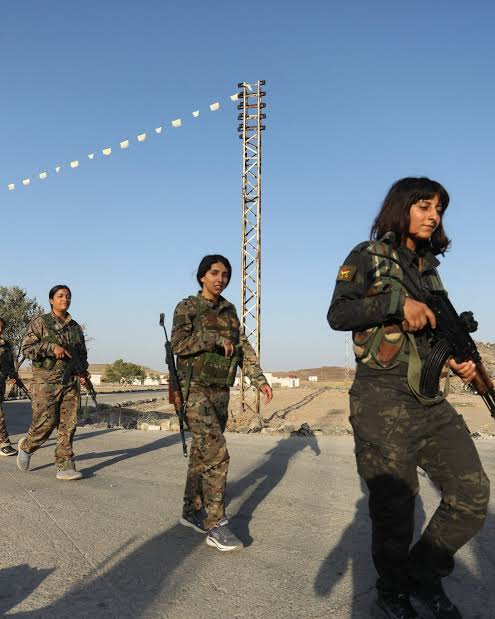
QAMISHLI, Syria — Kurdish women who fought Islamic State are negotiating for a place in Syria’s postwar security system, arguing that integration should preserve an organised female force rather than disperse its members into marginal roles.
The Women’s Protection Units, known as the YPJ, fought within the US-backed Syrian Democratic Forces and became one of the most visible groups in the campaign against Islamic State. Reuters reported on 2 September that YPJ commander Nowruz Ahmed wants the fighters incorporated as a distinct formation able to protect communities and retain a command structure.
That proposal has not been accepted by Syria’s new government. Negotiations have instead explored possible roles under the interior ministry, including special-operations work. A Kurdish military source told AFP last week that about 1,500 women could be absorbed into an interior-ministry force, but the final structure, duties and command arrangements remain unsettled.
The distinction matters. Integration can mean recognising experience and preserving authority, or it can mean removing weapons, ranks and collective influence while offering individually assigned jobs with little power.
YPJ fighters participated in battles that dismantled Islamic State’s territorial rule and later took security responsibilities around detention camps holding suspected fighters and relatives. Their record does not place any armed organisation beyond scrutiny. Syria still needs unified civilian control, transparent recruitment, rules against abuse and accountability for every force operating under state authority.
Women’s participation also cannot be measured only by how many fighters receive uniforms. Negotiators should publish the legal status of any new unit, its reporting line, pay, training, promotion routes and complaints process. Women should not be confined to searches of female civilians, guard duties or ceremonial visibility if their experience qualifies them for broader responsibilities.
The talks unfold amid deep mistrust between Kurdish authorities and the new national leadership after Bashar al-Assad’s fall in 2024. Security integration is therefore tied to larger disputes over decentralisation, Kurdish political rights and the future of institutions built in north-eastern Syria.
Many Syrian women experienced the war primarily as displacement, bereavement and violence rather than empowerment. The YPJ should not be used to romanticise militarisation or imply that carrying a weapon is the only form of public authority.
Its members nevertheless altered what was imaginable for women in their communities. A settlement that uses their military experience while erasing their organised voice would reproduce a familiar postwar pattern: women become symbols of resistance, then spectators to the peace.
Join the discussion