
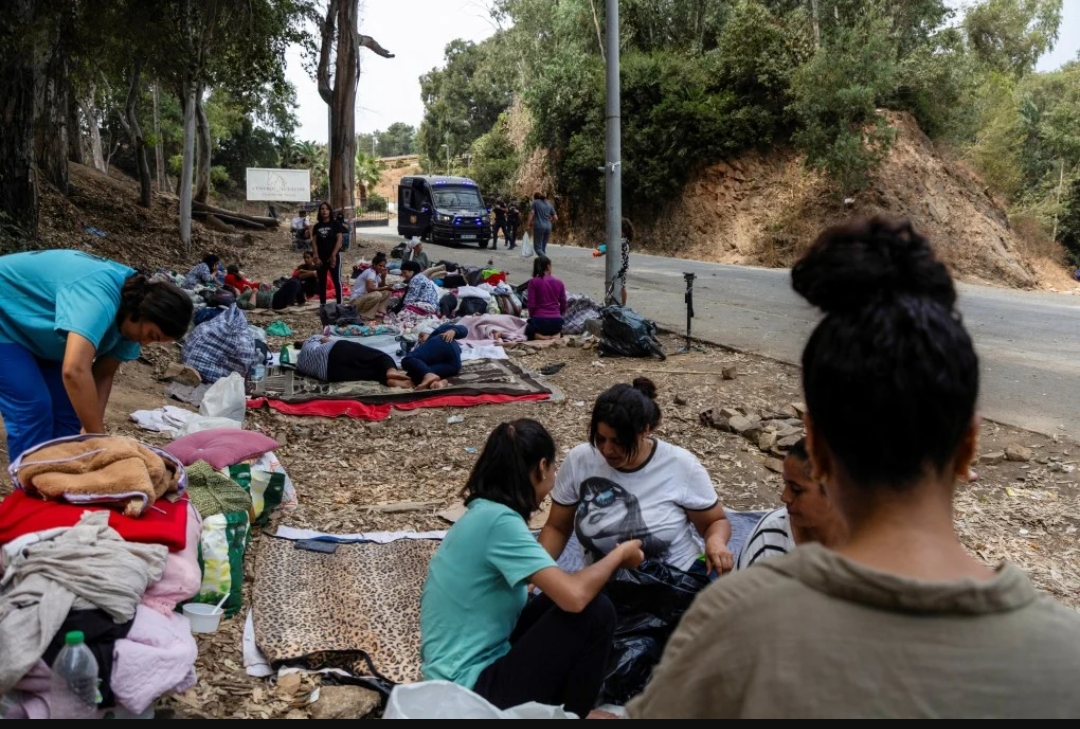
CEUTA, Spain — Migrant women waiting to be formally registered in Ceuta say sleeping in exposed public spaces has left them vulnerable to sexual harassment, adding another layer of danger to an already precarious journey.
Reuters interviewed women who entered the Spanish enclave during a mass crossing on 30 July. Some described being harassed while sleeping outdoors or moving through crowded areas as authorities struggled to process new arrivals.
Ceuta, located on Africa’s northern coast, is part of Spain and therefore represents a land entry point into the European Union. People seeking protection or opportunity frequently attempt to reach it from neighbouring Morocco.
Overcrowding affects all migrants, but women and girls face distinct risks. A lack of secure toilets, gender-separated accommodation, lighting and confidential reporting channels can increase exposure to harassment and violence. Women travelling alone, pregnant women and mothers caring for children may have particularly limited options.
Authorities have a responsibility to conduct registration efficiently while providing safe temporary accommodation. Security measures should not prevent migrants from reporting abuse or obtaining healthcare and legal information.
Spain and EU institutions must also examine whether border-management policies are creating predictable protection failures. Sexual violence should not be treated as an unavoidable consequence of migration.
Any response must avoid portraying migrant women only as powerless victims. Their accounts are evidence that should shape reception systems, policing and humanitarian services.
The immediate priorities are secure shelter, female protection staff, interpreters, confidential complaint mechanisms and access to medical and psychosocial support. Longer-term reform requires safe legal routes that reduce women’s dependence on smugglers and dangerous crossings.



Join the discussion