
MOSCOW — Lida Moniava, the founder of a prominent Russian children’s hospice, has been barred from using the internet and leaving home at night while she awaits trial on a charge of spreading what authorities call false information about the military.
The Simonovsky District Court imposed the restrictions on 3 September, according to Reuters and independent Russian media. Moniava must observe a curfew from 8 p.m. to 8 a.m., avoid witnesses in the case and remain offline until at least 30 October.
Prosecutors say posts on her Telegram channel contained false accounts of Russian forces’ actions against Ukrainian civilians. Moniava denies the allegation. The charge concerns political speech, not her management of the Lighthouse Children’s Hospice, which supports children and young adults with life-limiting conditions.
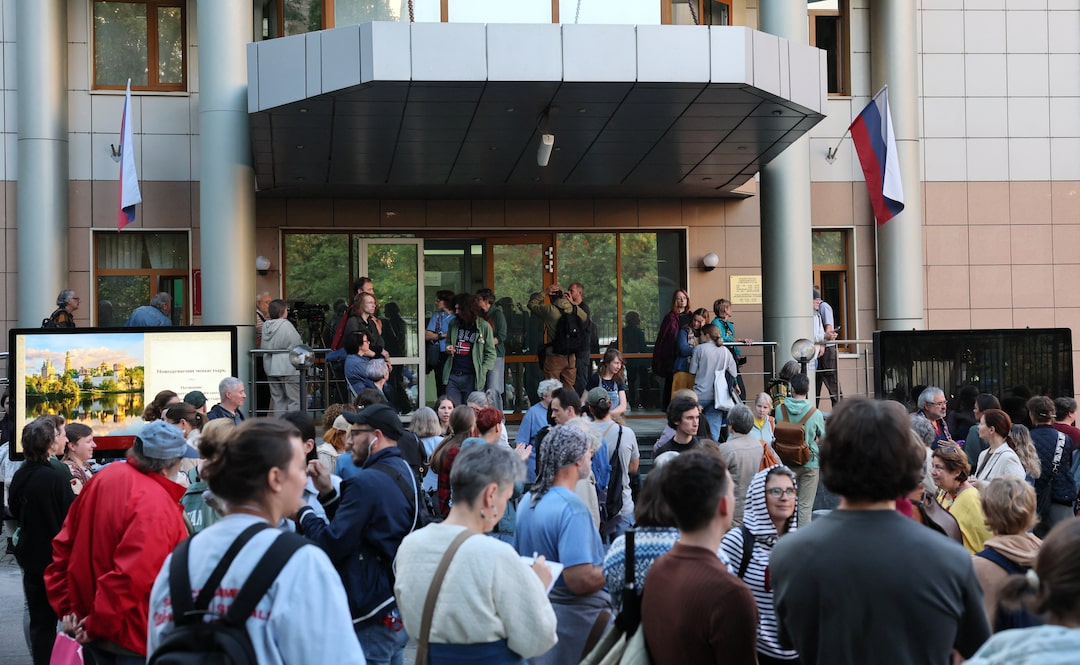
Several hundred supporters applauded outside the courthouse after the judge declined to order pretrial detention. That response reflects the public authority Moniava has accumulated through years of making disability, pain and family care visible in a system where such needs were often institutionalised or ignored.
Her refusal to leave Russia matters. Moniava has said that her work and the children who depend on it keep her in the country, even as earlier administrative penalties signalled the danger of her criticism. She was previously fined for allegedly discrediting the armed forces.
The prosecution belongs to a much wider suppression of dissent since Russia’s full-scale invasion of Ukraine. Rights monitor OVD-Info has documented more than 1,300 criminal cases connected with anti-war expression, with hundreds of people detained, imprisoned or awaiting trial.
Those figures should not flatten Moniava into a symbol. The restrictions have practical consequences: limiting communication, constraining movement and potentially disrupting leadership of a complex care organisation. Authorities should ensure that patients and families do not lose services because the state is pursuing its founder.
Her case also exposes a conflict between two vocabularies. Hospice work begins from the belief that suffering must be named accurately before it can be relieved. Wartime censorship demands that citizens accept the state’s authorised description of violence.
Moniava has not been convicted, and the evidence must be tested in an open court with full defence rights. Until then, the restrictions are not a neutral inconvenience. They silence a nationally recognised woman before a verdict and warn other professionals that moral authority earned through service does not protect political speech.


Join the discussion