
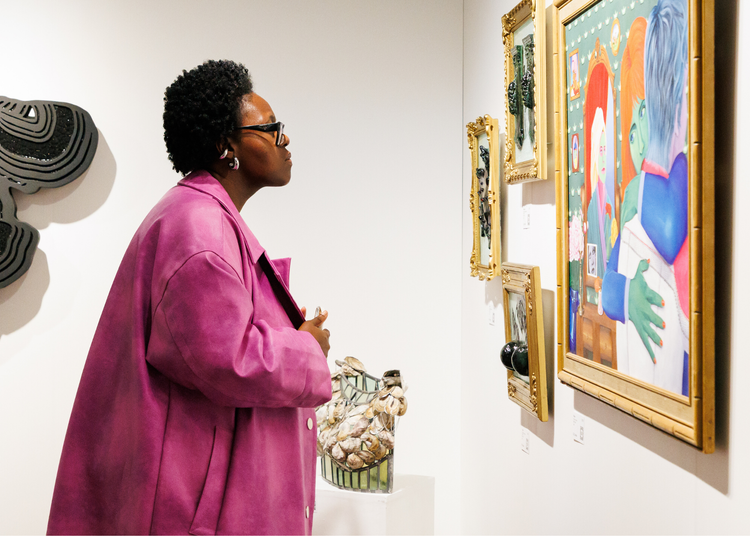
WASHINGTON — A new contemporary-art fair in the US capital is testing a direct proposition: women artists need access not only to exhibition space but also to buyers, institutions and income.
FEMME Art Fair opened on 27 August at The Square in downtown Washington and continues through 30 August. Organisers say more than 100 established and emerging artists are participating in exhibitions, films, workshops and public conversations.
USAN USAN and Our Daughters’ Futures Fund created the event to address women’s underrepresentation in art-market sales and institutional collections.
The fair says 100% of artwork-sale proceeds go to participating artists and curators. That commitment is more concrete than a general promise of exposure, although organisers should explain whether buyers pay separate processing charges and whether artists bear participation, transport or insurance costs.
Art fairs can generate important opportunities, but they are expensive environments. Framing, shipping, accommodation and the time required to staff a booth may consume much of a sale for an artist without gallery backing.
FEMME’s structure therefore deserves evaluation through net earnings, not only gross sales or attendance. Organisers should publish the number of artists who sold work, the range of prices and whether collectors established continuing relationships after the event.
The programme features the Guerrilla Girls, the anonymous feminist collective known for using statistics and visual satire to expose discrimination in museums and galleries. Their participation connects the fair with decades of activism asking who gets collected, reviewed and paid.
A market-centred response does not eliminate every inequality. Sales can still favour artists with established networks, and “women artists” includes people facing very different barriers involving race, disability, class, sexuality, age and geography.
Curatorial authority also matters. A fair can display diverse work while retaining decision-making and sponsorship power within a narrow group. Transparency about selection, fees and leadership would strengthen FEMME’s corrective claim.
The event’s location in Washington gives those questions a civic dimension. Museums, foundations, embassies and policymakers operate nearby, making the fair a potential meeting point between artists and institutions that control cultural resources.
Representation campaigns often ask audiences to notice women’s work. FEMME asks a harder question: whether audiences and institutions will purchase it on terms that sustain the person who created it.
The strongest measure of the fair will emerge after the installations close—when artists calculate what they earned, which doors opened and whether a temporary women-centred marketplace produced lasting access.


Join the discussion