
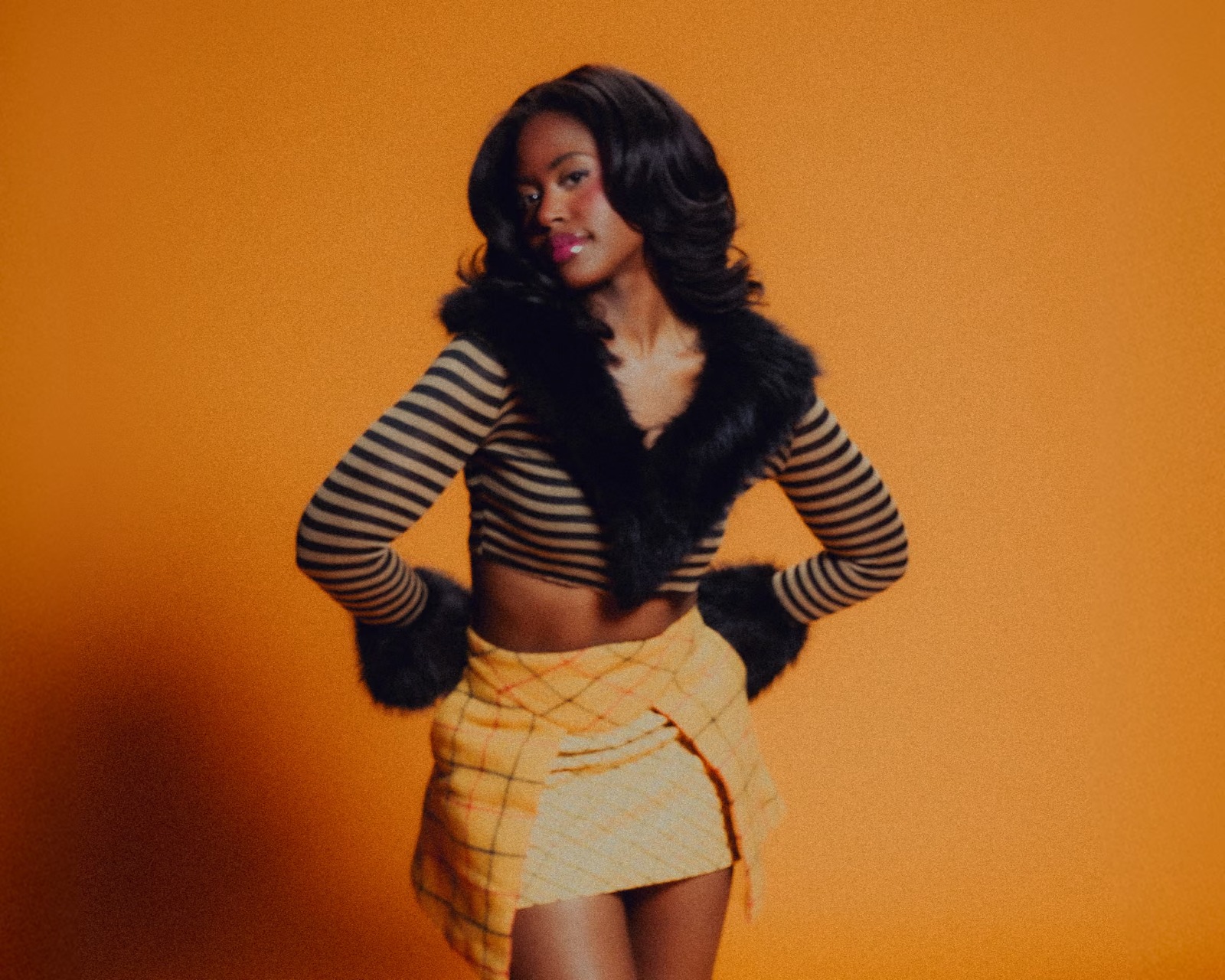
DETROIT, Michigan — Singer-songwriter Momo Boyd is using her solo career to challenge the assumption that Black women must sound, dress or speak within a limited set of cultural categories.
In a profile published on 6 September, Boyd discussed the uncertainty behind her debut solo EP, Miss Michigan, and the pressure that followed wider attention for her work with the sibling group Infinity Song. Her new music draws on folk, soft rock and melancholic singer-songwriter traditions while remaining connected to the family band’s harmony-rich sound.
Boyd’s rural Michigan upbringing is central to the project. Her earlier track American Love Song prompted arguments about patriotism and racial identity because some listeners treated country imagery as inconsistent with Black experience. That response exposed a familiar gatekeeping mechanism: a genre can borrow from Black music while Black artists are questioned when they inhabit its visual or emotional world.
Her work does not need to become a manifesto to be politically meaningful. Songs about uncertainty, faith, memory or romance expand representation by allowing a Black woman to be interior, contradictory and unresolved. The demand that marginalised artists constantly explain their community can itself become a creative restriction.
Industry categories still carry material consequences. Radio formats, playlists, press coverage, festival bookings and awards all sort music through genre. When those labels are also racialised, an artist may struggle to reach the audience most likely to understand the work. Crossing categories can be praised as innovation after success but treated as confusion before it.
Boyd has both advantages and risks in making the transition. Infinity Song provides an established audience and a collaborative home. A solo identity, however, requires listeners and executives to accept a voice that may be quieter and less easily branded than a family act.
The appropriate editorial approach is to take the music seriously without turning Boyd into a symbol for every Black woman artist. Her experience illustrates a system; it does not make her responsible for solving it. Critics should describe composition, performance and production with the same precision routinely granted to artists whose genre belonging is never questioned.
Boyd’s current work creates space by declining to ask permission for its combination of influences. That is not simply personal authenticity. It is a claim that Black women’s cultural lives are broad enough to contain Michigan fields, gospel harmony, pop visibility and private doubt at once.


Join the discussion