
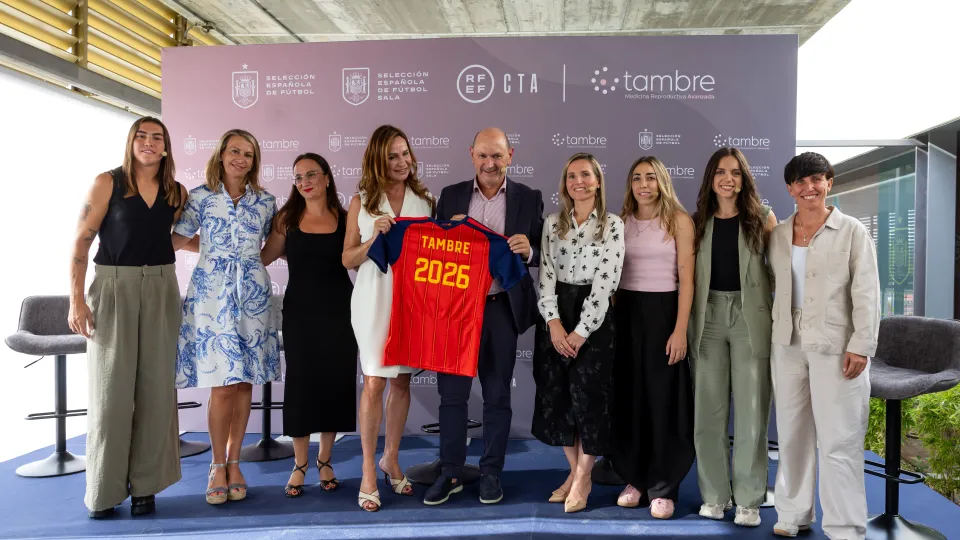
LAS ROZAS, Spain — Spain’s football federation has introduced fertility support for national-team players, top-flight referees and other eligible women in the sport, presenting egg freezing and assisted reproduction as additional options rather than instructions to postpone motherhood.
The Royal Spanish Football Federation announced its agreement with Madrid-based Clínica Tambre on 8 September. The arrangement runs through 2029 and covers women’s senior football and futsal internationals, First Division referees and assistants, and federation staff under different eligibility rules.
For international footballers, eligibility includes players selected for at least two matches since December 2025. The programme covers the clinical egg-freezing procedure and five years of storage, but not the medicines required for treatment, according to independent Spanish reporting. In-vitro fertilisation and reproductive-health information are also included within the partnership.
Players Olga Carmona and Patri Guijarro welcomed the additional choice. Their response matters because elite careers overlap with years when fertility typically declines, while injuries, selection and short contracts make long absences difficult to plan.
The benefit is not a fertility guarantee. Egg collection can fail, frozen eggs may not produce a pregnancy, treatment has physical and emotional costs, and outcomes vary greatly with age and health. The federation and clinic should provide independent counselling and success rates specific to each patient’s circumstances.
Critics including Olympic athlete Ana Peleteiro have argued that paying for preservation can appear progressive while leaving the institution’s timetable unchanged. Spain’s CCOO union has called for attention to employment security during pregnancy, postpartum recovery and return to competition. Those concerns do not make egg freezing inherently exploitative; they identify the conditions required for genuine consent.
A voluntary benefit becomes coercive if a player believes selection, renewal or status depends on delaying pregnancy. Medical information must be confidential from coaches and selectors. Declining treatment should carry no career penalty, and participation data should be published only in aggregate.
The RFEF says it has removed anti-pregnancy clauses and introduced measures allowing families to accompany players during major tournaments. Those protections should be written into enforceable rules across clubs, not depend on federation goodwill or a player’s national-team status.
Equity also requires considering women outside the elite pool. A benefit tied to international call-ups may reward established players while younger, lower-paid athletes face the greatest financial insecurity. Clubs and leagues should examine whether comparable support can reach them without diverting money from wages, maternity leave or childcare.
Spain’s programme creates a useful option. Its success should be judged less by the number of eggs frozen than by whether women can choose pregnancy, preservation or neither without losing work, privacy or standing in the game.




Join the discussion