
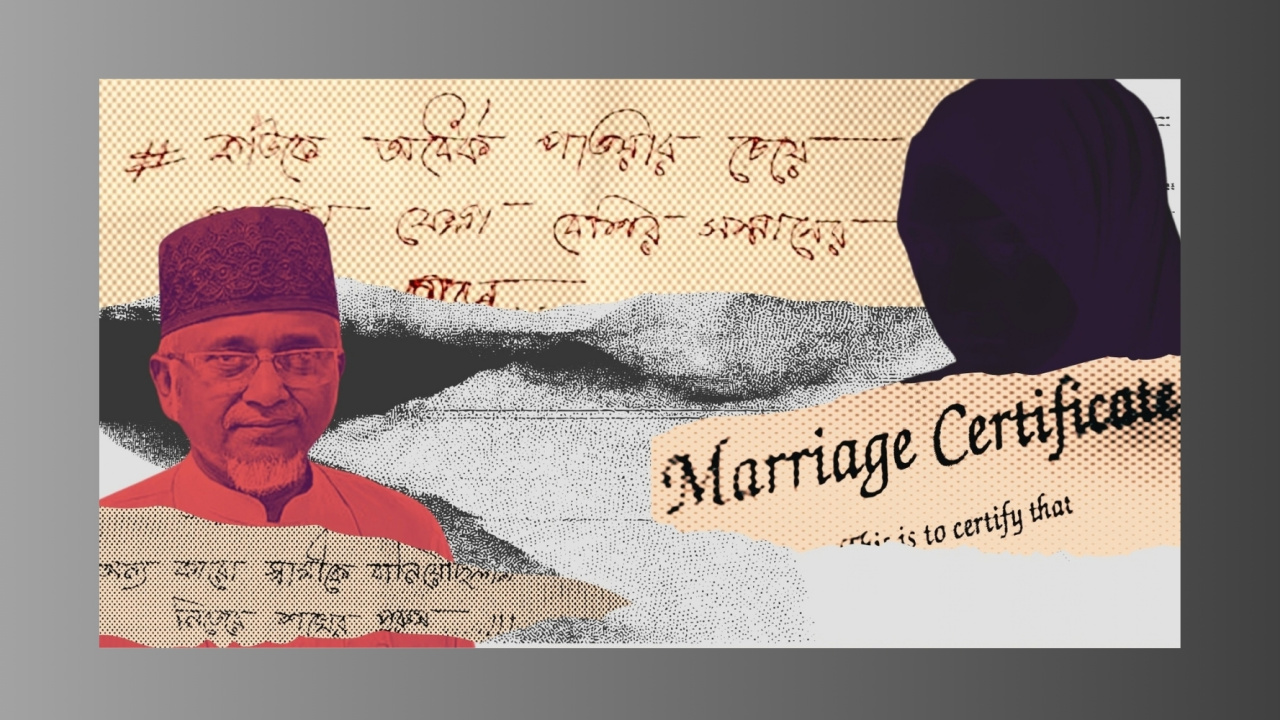
For months, Bangladesh knew Mariam Khatun mostly through somebody else.
She was the young woman seen with Satkhira-4 MP Gazi Nazrul Islam in private footage that circulated online. She became a political controversy, a discussion about marriage, morality, a Nikahnama and Nazrul’s expulsion from Jamaat-e-Islami.
Mariam herself remained much harder to hear.
On 20 September, the 19-year-old was found dead at a flat in NAM Bhaban in Dhaka. Her father later filed a case accusing Nazrul, his first wife Maksuda Begum and Mariam’s maternal uncle of abetting her death. The case has now been transferred to the Detective Branch of Dhaka Metropolitan Police. Nazrul and Maksuda have been remanded for questioning. Nazrul has publicly denied the allegations. These remain allegations under investigation, not findings of guilt.
A Daily Star commentary published on 23 September asks a question that deserves to survive beyond this case: what did the public ask about Mariam while she was still alive?
That does not mean assuming that Mariam lacked agency simply because of her age or the age and status of the man she married.
Women can make relationships that families, political parties or strangers dislike. Respecting women’s autonomy means recognising that.
But agency and power are not the same thing.
When a 19-year-old woman is linked to a 75-year-old sitting MP, the public-interest questions should not stop at whether a marriage document exists. Is she able to speak independently? Does she have access to family, money and support? If conflict develops, can she leave safely? Is anyone listening to her account rather than speaking on her behalf?
Those are not accusations. They are the kinds of questions journalists, families and institutions should learn to ask whenever a substantial power imbalance exists.
Mariam’s death must now be investigated through evidence and due process. Her father has alleged physical and mental abuse; the accused must have the opportunity to answer those allegations through the legal system.
But there is a separate social reckoning.
The internet spent enormous energy judging Mariam’s morality when she was alive.
A more humane public culture would spend at least as much energy making sure a young woman can speak, seek help and be taken seriously before something irreversible happens.
A woman should not have to become a tragedy before society becomes curious about her voice.

Join the discussion