
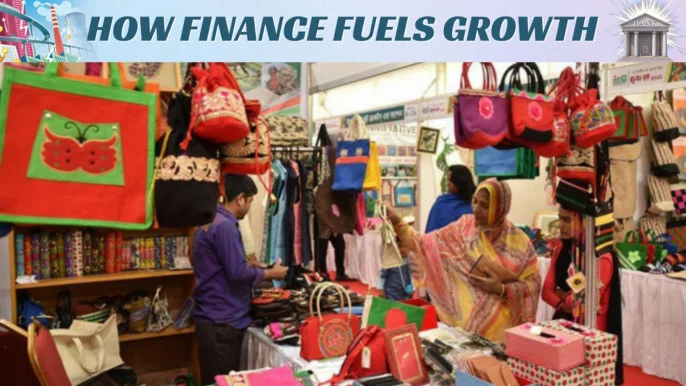
Rozina Begum has customers.
She has regular orders.
Her food business in Tangail has grown from a home-based operation into an enterprise employing 14 people.
What she does not have is enough property to satisfy a bank.
Rozina needs around Tk20 lakh to buy machinery and increase production, but her loan application has run into the collateral barrier that affects many Bangladeshi entrepreneurs—and women disproportionately.
Her story forms part of a broader examination of Bangladesh’s small and medium enterprise financing published by The Business Standard on 25 August.
Women entrepreneurs received only around 4–6% of total SME lending between FY2020-21 and FY2022-23. Their latest share has risen to 7.28%, but that remains less than half of the policy target of 15%.
The problem is partly structural.
Banks often prefer borrowers with land, property and formal financial records that can be used to assess risk.
Women are less likely to own substantial fixed assets in their own names, particularly when businesses begin from kitchens, small workshops or online pages.
A commercially viable enterprise can therefore remain difficult to finance even when it has customers and cash flow.
Bangladesh Bank has introduced refinancing arrangements and dedicated support for women entrepreneurs, with some financing available at lower interest rates. But access to a programme on paper does not guarantee access at a bank branch.
Experts increasingly argue that lenders should assess more than conventional collateral.
Transaction history, regular sales, digital payments and demonstrated cash flow can provide evidence that a business is capable of repaying a loan.
Business training is also important.
Entrepreneurs who maintain reliable accounts, tax documents and digital records are better positioned to approach formal lenders as their businesses grow.
But training should not become another excuse for denying credit to businesses that are already commercially viable.
Women-owned enterprises create jobs, generate household income and expand local economies.
When a woman cannot purchase machinery despite having customers waiting, the lost opportunity belongs not only to her.
Her employees lose potential work, suppliers lose orders and the economy loses production.
Bangladesh has spent years encouraging women to become entrepreneurs.
The next challenge is ensuring that when those businesses succeed, the financial system is willing to finance their next stage of growth.

Join the discussion