
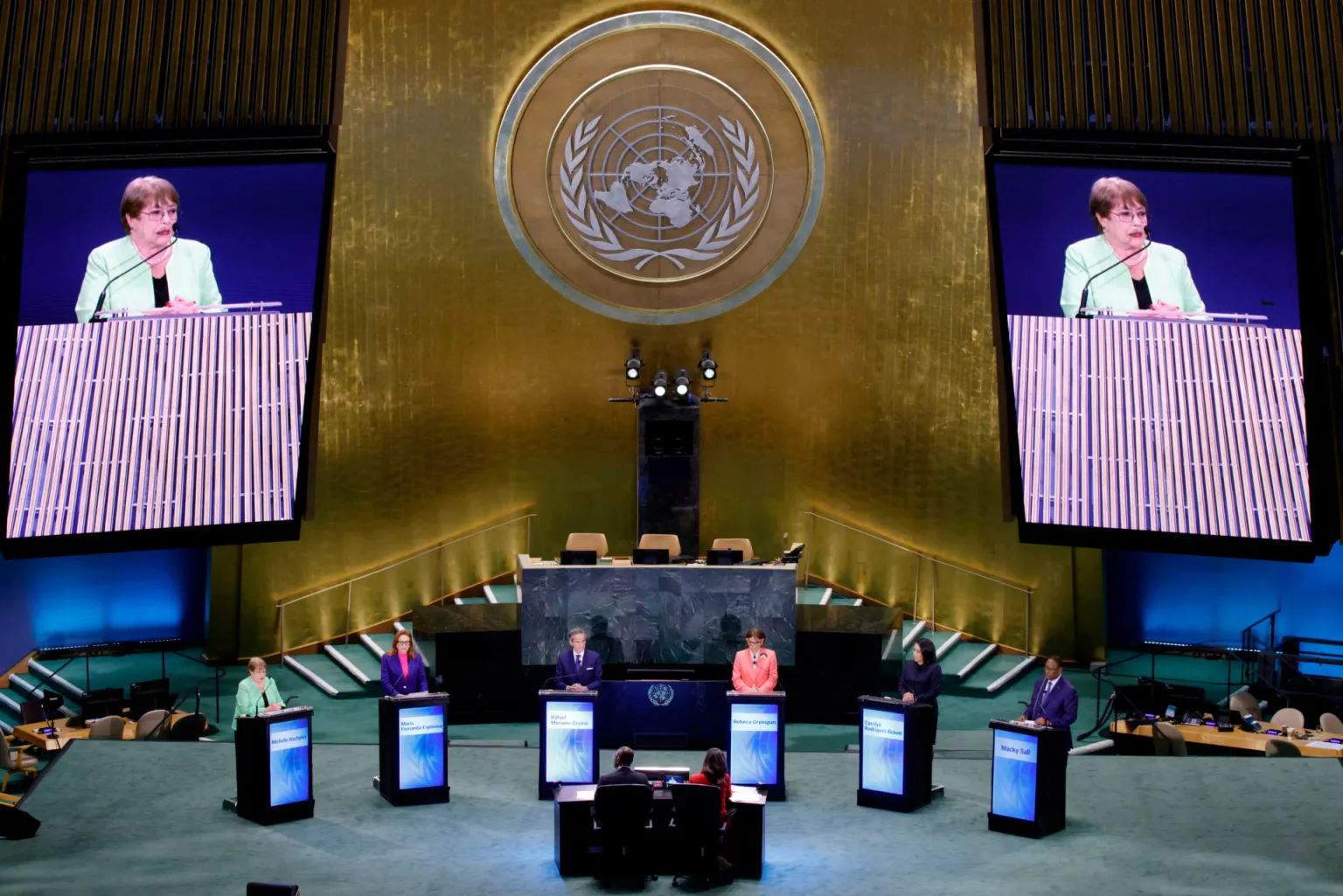
UNITED NATIONS — Women are occupying a prominent position in the contest to succeed António Guterres as UN secretary-general, an office held exclusively by men since the organisation was founded in 1945.
The official candidate field includes Costa Rica’s Rebeca Grynspan, Guyana’s Carolyn Rodrigues-Birkett, Ecuador’s María Fernanda Espinosa and Ivonne Baki, alongside other candidates from different regions.
Grynspan emerged strongly in an early informal Security Council poll, while Rodrigues-Birkett has received support from the Caribbean Community. Both would bring Latin American or Caribbean representation to the UN’s most visible diplomatic position.
The election is not decided through a direct vote by all member states. The 15-member Security Council recommends a candidate to the General Assembly, and any of the five permanent council members can effectively block a contender.
That structure means experience and public support may be insufficient without geopolitical acceptability. Campaigns emphasising gender representation must also be evaluated through candidates’ records, financial disclosures and plans for institutional reform.
Appointing a woman would not automatically transform the United Nations. Women already perform extensive diplomatic, humanitarian and peacebuilding work while remaining underrepresented in the rooms where security decisions are made.
Nevertheless, leadership carries symbolic and practical influence. A secretary-general shapes senior appointments, sets diplomatic priorities and can elevate issues such as conflict-related sexual violence, women’s peacebuilding and gender-responsive humanitarian action.
The decisive question should be who can lead an institution facing war, funding pressure and declining public trust. For the first time, that assessment is being conducted among a field in which women are not peripheral contenders.
Join the discussion