
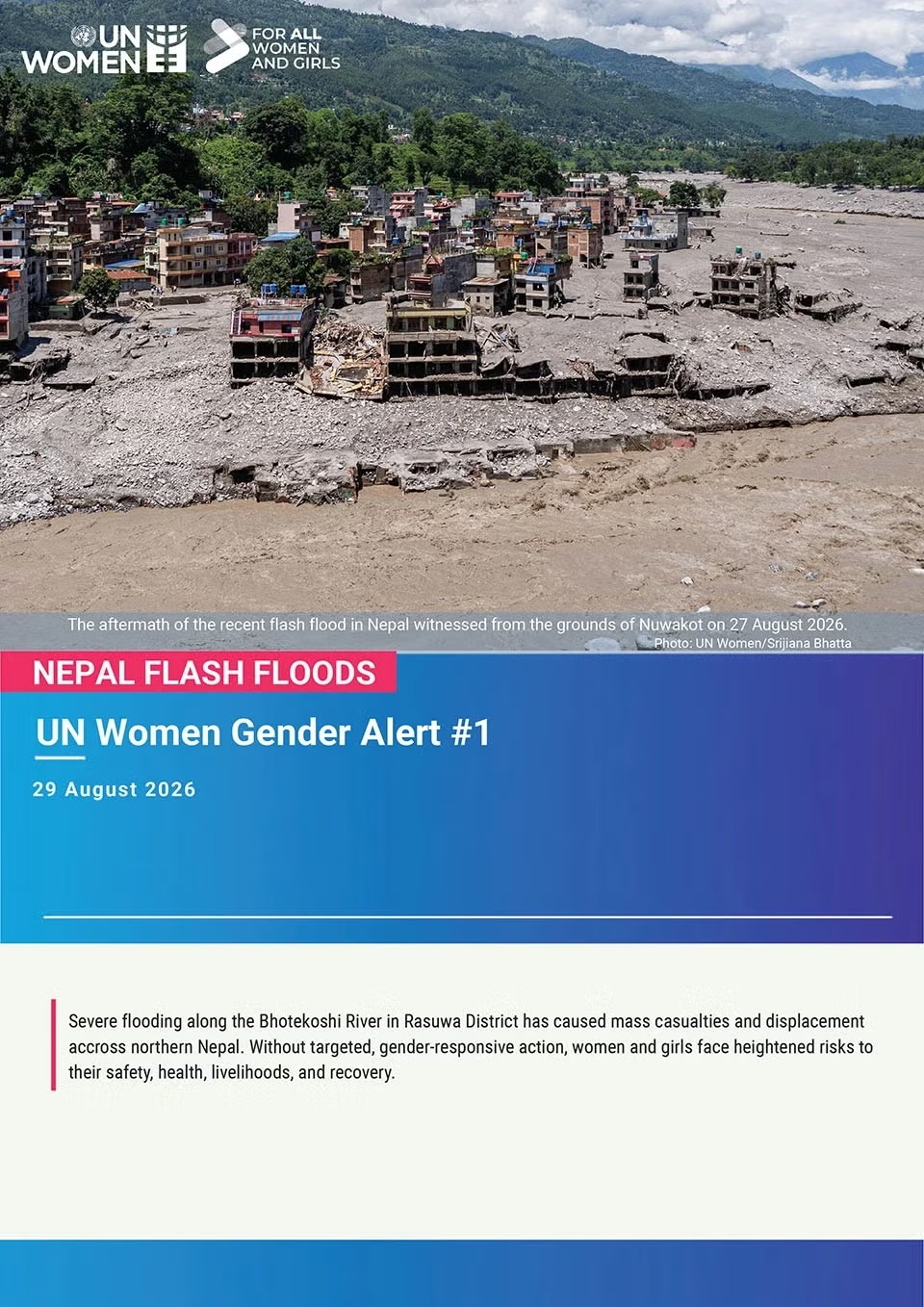
KATHMANDU, Nepal — Emergency agencies responding to destructive flooding in Nepal are being urged to identify women’s needs explicitly instead of treating affected households as gender-neutral units.
A gender alert released by UN Women on 29 August estimates that approximately 157,050 women and girls have been affected directly or indirectly in Rasuwa and Nuwakot districts.
The alert warns that displacement and damage to infrastructure can interrupt maternal and reproductive healthcare while increasing exposure to gender-based violence, trafficking and exploitation.
Flooding does not discriminate when water enters a home, but its consequences follow existing inequalities. Women may have less control over money, land records, phones and transport, making it harder to register for assistance or replace documents.
Women also frequently absorb additional unpaid work after a disaster: locating water and food, caring for children and older relatives, cleaning damaged homes and managing illness in temporary accommodation.
Relief centres need private, well-lit toilets and bathing spaces with locks. Menstrual products should be provided according to women’s stated preferences, together with clean water and appropriate disposal arrangements.
Pregnant women require functioning referral routes to skilled delivery and emergency obstetric care. Mobile clinics are useful only if communities know when they will arrive and ambulances or other transport remain available during complications.
Safety risks can increase when families are separated or living in crowded shelters. Confidential reporting and survivor assistance should not depend on making a police complaint, particularly where a woman fears retaliation or stigma.
Women must also participate in relief committees and distribution decisions. Their presence should extend beyond voluntary cooking or cleaning roles to authority over budgets, beneficiary lists and site design.
Reuters has separately reported concerns about whether Nepal received sufficient upstream warning before the flooding. Early-warning systems should reach women who do not own smartphones, speak the dominant language or participate in formal local-government networks.
Officials need sex-, age- and disability-disaggregated information, but data collection must not delay urgent assistance. Nor should women be required to disclose unnecessary personal information in crowded public locations.
The UN alert is an early assessment rather than a complete count of losses or needs. Conditions will change as water recedes and displaced families attempt to return.
That makes accountability especially important. Authorities should publish where healthcare, cash support and safe accommodation are available and track whether women can actually reach them.
A gender-responsive emergency plan is not an optional addition after food and shelter are delivered. It determines whether those essential services are safe, accessible and sufficient for everyone expected to use them.
Join the discussion