
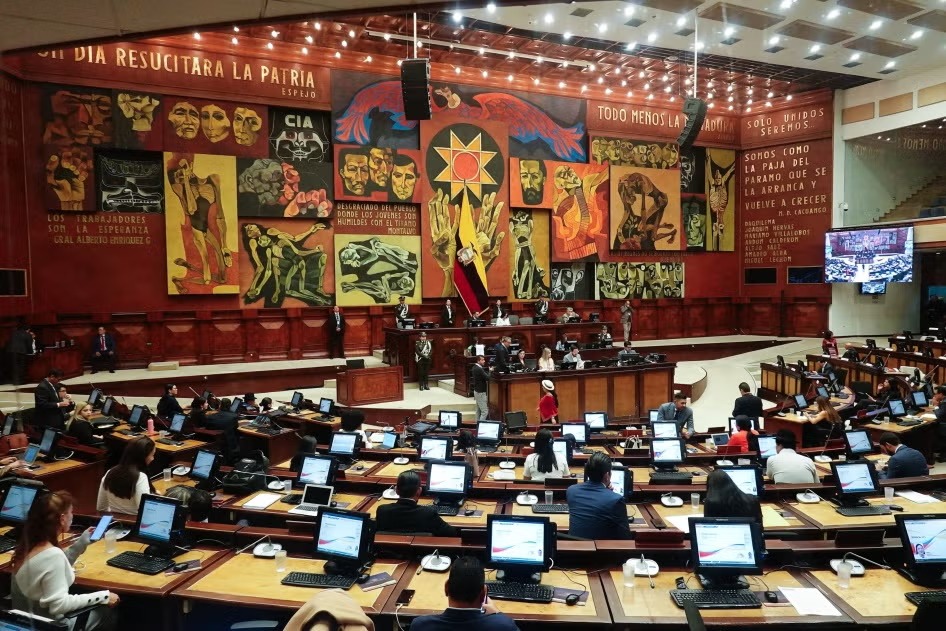
QUITO, Ecuador — Ecuador’s new adoption law has introduced faster administrative timelines while also expanding discrimination against lesbian, gay and bisexual prospective parents, Human Rights Watch said on 27 August.
The Reform Law of Various Legal Bodies for the Streamlining of Adoption entered into force on 14 August. Ecuador’s National Assembly approved it on 28 July by 118 votes, with 25 abstentions, and President Daniel Noboa communicated his assent on 13 August.
The procedural reforms impose deadlines on several stages of adoption. Authorities receive limited periods to locate relatives, assess a child’s circumstances, evaluate prospective parents and complete matching procedures. Reducing unnecessary institutional stays can protect children when decisions remain careful and individualised.
The same law, however, says a single adopter must be heterosexual. Ecuador’s Constitution already restricts joint adoption to different-sex couples, even though same-sex marriage is legal. The new provision extends exclusion to single applicants who were not previously barred in the same explicit way.
That restriction directly affects lesbian and bisexual women who seek to adopt independently. It replaces an assessment of each applicant’s ability to provide a safe home with a blanket judgment based on sexual orientation.
The law also identifies parental support for certain gender-affirming medical care for a transgender child as potential grounds for removing parental authority. Human Rights Watch warned that the wording could discourage families from seeking medical advice because they fear state intervention.
Supporters present the legislation primarily as an adoption-efficiency measure. Those objectives should be separated. Governments can establish clear deadlines, improve staffing and reduce duplication without limiting which adults may be evaluated as parents.
The law’s effect on children requires particular attention. Excluding qualified applicants may reduce the pool of families available to children living in institutional care. Threatening parents who seek healthcare guidance can also destabilise families instead of protecting them.
Legal challenges are likely to focus on Ecuador’s constitutional protection against discrimination and the best-interests principle governing decisions about children.
Reporting should avoid treating this only as an abstract conflict over LGBTQ rights. The practical issue concerns real family relationships: which women are permitted to offer a home, which parents may safely seek medical advice, and whether children’s welfare is assessed individually or filtered through political ideology.

Join the discussion