
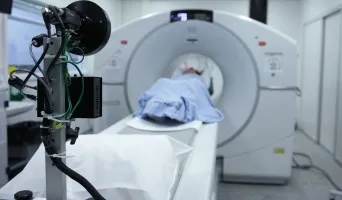
LONDON — A one-week course of radiotherapy remained as effective and safe as the conventional three-week schedule 10 years after treatment for selected patients with early breast cancer, according to final results published on 1 September.
The phase-three FAST-Forward trial enrolled approximately 4,000 patients at UK hospitals. Participants received one of three schedules after surgery: 40 gray divided across 15 treatments, 27 gray across five treatments, or 26 gray across five treatments.
Ten-year cancer recurrence in the treated breast was 3.6% in the three-week group, 3% among patients given 27 gray and 2% in the 26-gray group, according to the published analysis.
The 26-gray schedule produced late effects in normal tissue comparable with the longer treatment. The 27-gray dose caused more late effects and is not the shortened regimen supported as the preferred standard.
Earlier five-year findings had already changed practice in the United Kingdom and elsewhere. Publication of the decade-long results addresses an important concern: a convenient treatment must continue controlling disease without producing harm that becomes visible only years later.
Five appointments instead of 15 can reduce transport expenses, time away from employment and reliance on relatives for care. Those burdens can be particularly heavy for women living far from radiotherapy centres or combining treatment with childcare.
Shorter schedules can also release capacity in health systems with too few machines and trained staff. The benefit will be limited, however, if saved appointments do not translate into more patients receiving timely treatment.
The findings apply to the patient population and treatment fields studied. Decisions may differ for people requiring irradiation of lymph nodes, reconstruction-related planning or treatment for more advanced disease.
Patients should not interpret the result as permission to reduce or rearrange prescribed treatment independently. Dose per session changes when the number of appointments changes, and the total must be planned by oncology specialists.
The study’s long follow-up is a major strength. It also reflects treatment delivered within a controlled clinical trial, where quality assurance may exceed what is available in every radiotherapy service.
Health systems adopting the one-week schedule should monitor recurrence, cosmetic outcomes, pain and other late effects in ordinary practice.
Efficiency in cancer care can sound like rationing. Here, the evidence supports a different interpretation: fewer visits can provide equivalent treatment for appropriate patients.
The challenge is to make that evidence available beyond well-resourced centres, so a woman’s chance of completing radiotherapy does not depend on whether she can travel to hospital every weekday for three weeks.



Join the discussion