
One of the most difficult tests of political leadership is not how governments treat supporters.
It is how they treat opponents.
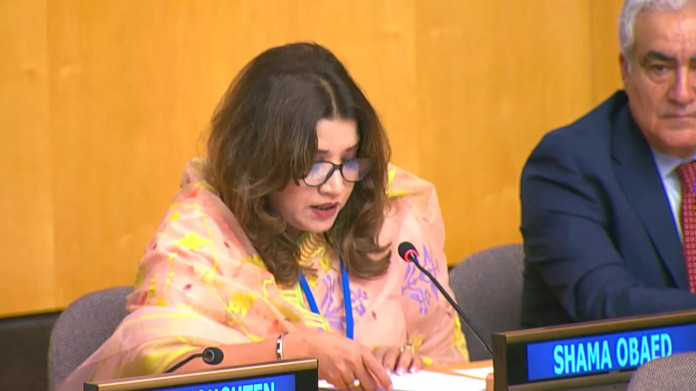
Bangladesh State Minister for Foreign Affairs Shama Obaed Islam said on Tuesday that the government is committed to protecting human rights and ensuring that people are not imprisoned or detained simply because of political affiliation.
Her remarks came after Human Rights Watch raised concerns over prolonged pretrial detention of people linked to the former Awami League government.
Obaed said allegations arising from political violence and the events surrounding the 2024 uprising should be reviewed based on evidence, and cases without factual foundations should be addressed accordingly.
She also said the government’s human-rights commitment should apply across party lines—including to political opponents.
For a woman in a senior foreign-policy role, the statement is notable both politically and symbolically.
Women remain underrepresented in senior decision-making positions worldwide, particularly in foreign affairs and national-security policy.
Leadership in these roles involves more than representing a country abroad.
It also involves communicating the values that the state claims to uphold at home.
Due process is one of those values.
Democratic systems become vulnerable when detention or criminal prosecution is perceived as a political weapon, regardless of which party holds power.
That does not mean allegations of violence, corruption or human-rights abuses should be ignored.
It means investigations and prosecutions should be grounded in evidence, individual responsibility and fair procedures.
Obaed also framed Bangladesh’s foreign policy around national interests and respectful engagement with international partners, arguing that an elected government has greater legitimacy in external negotiations.
Whether the government consistently meets the human-rights standard she described will ultimately depend on institutions rather than speeches.
Courts, police, prosecutors and ministries will determine whether political opponents genuinely receive equal treatment.
Still, public commitments matter because they create standards against which leadership can later be measured.
Women’s leadership is sometimes discussed only in terms of how many women occupy senior roles.
The more consequential question is what they do when they get there.
In this case, the principle articulated by Obaed is straightforward: state power should not become a tool of political revenge.
The challenge is ensuring that principle survives contact with politics.



Join the discussion