
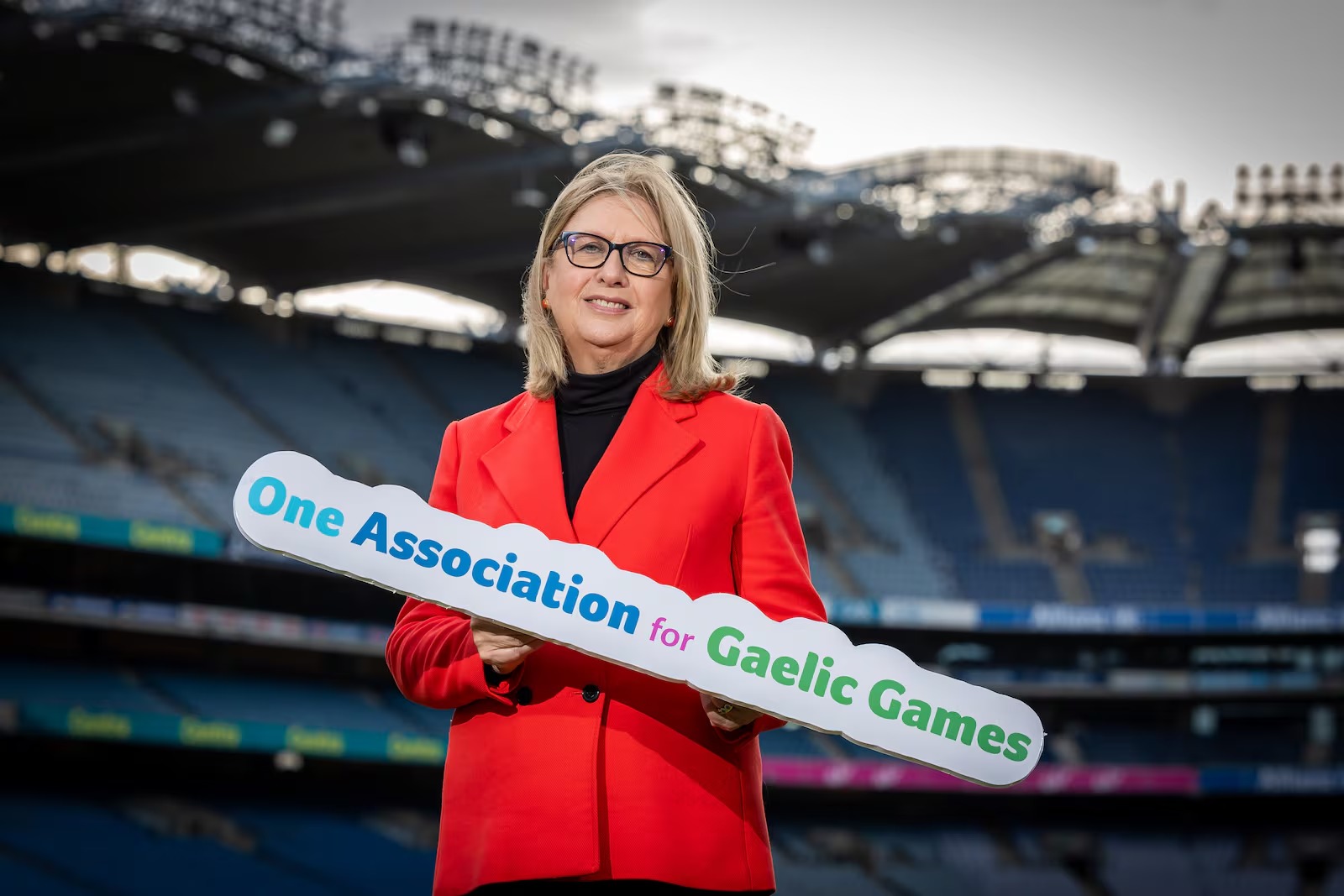
DUBLIN — Former Irish president Mary McAleese has resigned as chair of the committee charged with integrating Ireland’s three Gaelic games bodies after the men’s Gaelic Athletic Association stepped back from a plan to complete the process in 2027.
McAleese announced her departure on 8 September after four years leading the Steering Group on Integration. The group brings together the GAA, the Ladies Gaelic Football Association and the Camogie Association, which separately govern sports played through many of the same communities and clubs.
All three associations had committed to integration and were preparing special congresses intended to create a single membership structure from April 2027. The GAA then asked to pause and reconsider the approach, saying organisational structures remained unresolved and that the original deadline was too ambitious.
McAleese said she believed commitment at the top of the GAA had disappeared and suspected resistance to women holding decision-making roles in the unified organisation. GAA director general Tom Ryan rejected accusations of misogyny, pointing to women’s participation in club executives and describing structure—not gender—as the central obstacle.
Those are competing interpretations, but the governance facts can be examined. The integration mandate was approved through the associations’ democratic processes. A pause without a new timetable, published obstacles and accountable decision-makers can turn a commitment into an indefinite aspiration.
The GAA says work in 2027 will refine principles, structures and a sequential plan. The LGFA and Camogie Association both thanked McAleese and restated support for integration. The Gaelic Players Association said players continue to back equal recognition, investment and opportunity and will not accept indefinite delay.
Integration is more than changing an organisational chart. It affects access to pitches, scheduling, funding, sponsorship, facilities and authority at club and national level. A poorly designed merger could allow the largest body to absorb women’s games without preserving their expertise or priorities. Delay, however, also preserves existing inequalities.
The leadership test is therefore dual: move with urgency and design safeguards. Any revised plan should publish milestones, decision rights, financial arrangements and minimum representation for women and each code. Club-level participation cannot substitute for women sharing power in national management.
McAleese’s resignation removes an independent chair with political stature and makes the institutional disagreement impossible to hide. Her exit is not proof of the motive she suspects, but it is evidence that trust in the process has broken.
The three bodies can repair that trust only with more than renewed language. They need a timetable people can monitor and a structure in which women enter the room as governors of Gaelic games, not as beneficiaries waiting for inclusion.

Join the discussion