
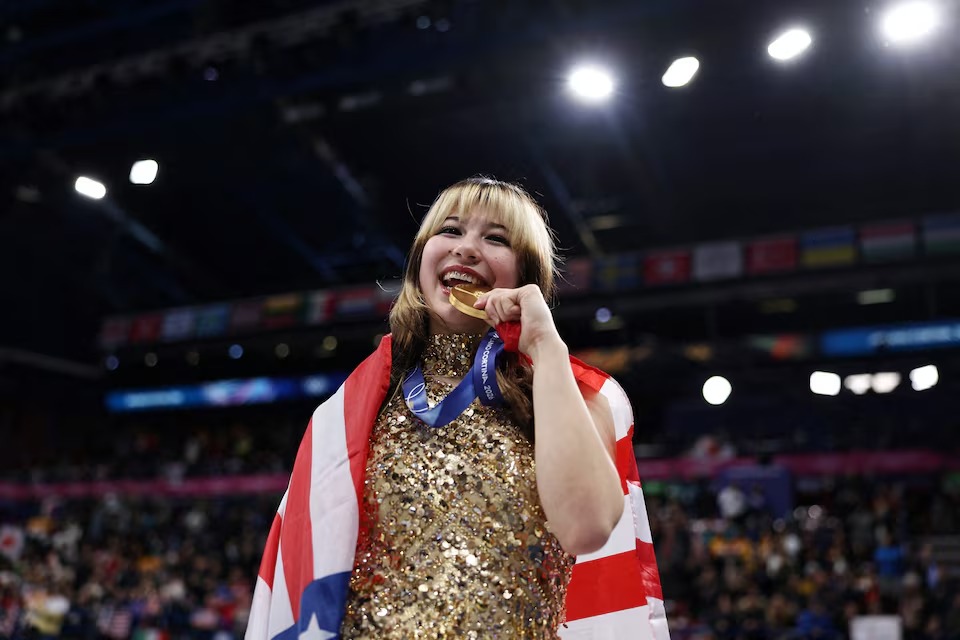
UNITED STATES — Alysa Liu’s decision to sit out the next figure-skating season is an example of leadership exercised through control over one’s own career.
The Olympic champion said she intends to use the time to refine her technique and plans to return. Her announcement follows a season in which she won women’s singles and team gold for the United States at the Milano Cortina Games.
Elite athletes are frequently told to take advantage of momentum. A new champion may be expected to enter every major competition, appear at promotional events and convert visibility into sponsorship.
Those pressures can make stepping back feel professionally risky, particularly for women athletes whose commercial value is often tied to constant public availability.
Liu’s choice challenges the idea that commitment must be demonstrated through uninterrupted competition. Long-term athletic development may require technical rebuilding, recovery and time away from scoring systems.
Leadership should not be confused with pretending that rest carries no cost. Liu may lose ranking opportunities and immediate competitive exposure. Her decision is meaningful precisely because she has chosen a longer horizon.
The announcement can also influence younger skaters. Athletes should be able to communicate limits without being labelled difficult, ungrateful or insufficiently ambitious.
Responsibility still lies with institutions. Federations and sponsors must structure contracts and support systems that allow planned breaks without destroying an athlete’s career.
Liu’s previous departure and successful return provide evidence that elite sport does not always require a conventional linear path. However, no athlete should be expected to reproduce her outcome.
Her leadership in this moment is quiet: she has stated what she needs, explained her intention and declined to let an Olympic title dictate an externally designed schedule.
The quality of that decision will be measured over time. For now, it provides a valuable model of a woman athlete treating her body and career as her own.
Join the discussion