
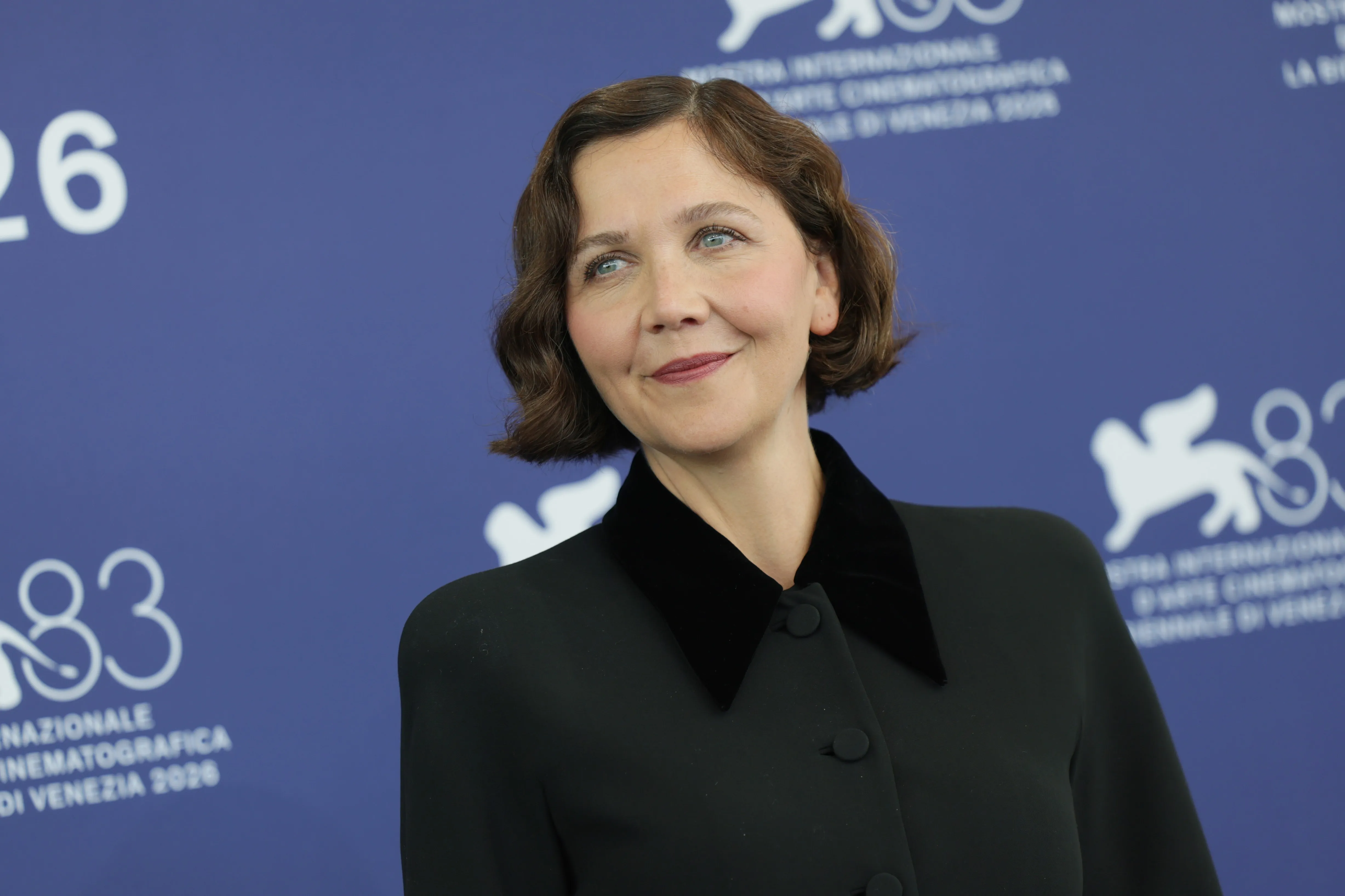
VENICE, Italy — Maggie Gyllenhaal opened the 83rd Venice International Film Festival on 2 September by challenging the structures that decide which stories receive money, prestige and the label of serious cinema.
Gyllenhaal, who leads this year’s main jury, said the obstacles facing women directors are systemic rather than the result of individual confidence or talent. Women’s work can struggle for financing because decision-makers do not always regard their subjects as important or as “high art,” she argued at the opening press conference.
The festival’s own competition demonstrates the imbalance. Only two of 21 titles are directed or co-directed by women, according to Reuters and the official programme. One is May el-Toukhy’s Woman Unknown; the other is Rachel Szor’s co-direction of Naza with Yuval Abraham.
Festival director Alberto Barbera has pointed to the relatively low share of submissions from women. Submission numbers are relevant, but they are not an explanation by themselves. Festivals help create the pipeline through repeat invitations, industry relationships, premiere requirements and the prestige that improves a director’s chances of financing her next film.
The imbalance has material effects. Main-competition placement attracts distributors, critics, sales agents and awards attention. Women’s films appearing in sidebars may still reach audiences, but they do not receive the same economic and symbolic opportunity.
Gyllenhaal’s role also has limits. A woman presiding over the jury cannot alter the films selected before the jury begins work. Her authority is real at the awards stage but does not correct the earlier commissioning and financing systems she criticised.
Venice should publish annual data on submissions, selection committees and outcomes by gender and region. It should also examine repeat participation: festivals often construct the category of “major auteur” by repeatedly inviting directors who were already given early access.
Numbers alone cannot decide artistic quality. They can reveal whether claims of neutral judgment repeatedly produce the same narrow result.
Gyllenhaal rejected the idea that cinema can be separated from politics, noting that films build empathy by showing lives and choices. That principle applies to institutions as well as stories. A festival’s programme tells the public whose imagination is considered universal.
Venice has placed a woman at the head of its jury while offering women directors less than one-tenth of the competition. Her opening intervention ensures that contradiction will accompany every award the jury makes.




Join the discussion