
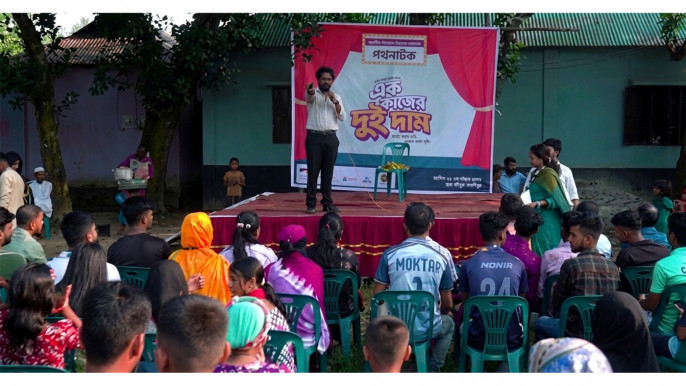
Women workers in Gazipur marked International Equal Pay Day in an unusual way: they turned the wage conversation into theatre.
Ready-made garment workers in Sreepur created, wrote and performed a street drama on 18 September about gender-based wage discrimination, the value of workers’ labour and the principle of equitable remuneration. The event was reported on 19 September as part of the five-year Ami Nargis campaign.
The most useful part may have happened after the performance.
Workers discussed salary structures, overtime compensation, payslips and wage-calculation methods—the practical information that allows an employee to understand whether she has actually been paid what she was promised.
Equal-pay conversations can become abstract quickly.
A headline may compare average male and female earnings across an industry, but an individual garment worker experiences wages through much smaller transactions: a basic salary, attendance payment, overtime hours, deductions, production incentives and the final amount deposited or handed over.
If she cannot independently calculate those numbers, unfair treatment can be difficult to identify.
That makes pay transparency a form of economic power.
Workers should be able to see the wage rate attached to their grade, the overtime rate, hours recorded, deductions made and how the final figure was calculated. Payslips should be understandable rather than merely issued for compliance.
The Gazipur programme was organised under the STILE II project, implemented by GIZ and KONA Foundation, which works on sustainability and workplace equality in Bangladesh’s textile and leather sectors. The Ami Nargis campaign also addresses discrimination and gender-based violence and is developing community support links for women facing violence.
The event itself does not provide a new national estimate of Bangladesh’s gender wage gap, and SheFront would not infer one from a street-drama programme.
Its importance is different.
It shows workers discussing the mechanics of pay rather than being treated only as recipients of awareness messages.
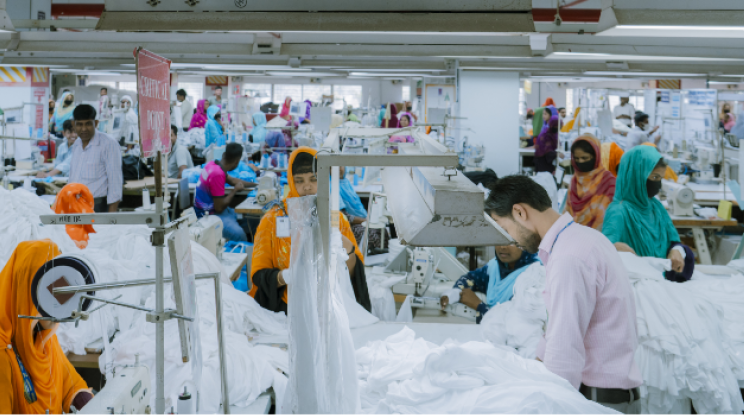
Women make up a major share of Bangladesh’s garment workforce. Their economic contribution should translate into more than employment numbers. It should include the ability to understand wages, question discrepancies, claim overtime and participate in workplace dialogue without retaliation.
A fair salary system is not transparent because management knows how it works.
It is transparent when the woman receiving the salary can explain every line herself.


Join the discussion