

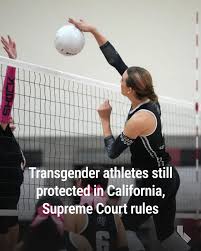
LOS ANGELES — California may continue allowing transgender girls to compete on girls’ school teams after a federal judge dismissed the Trump administration’s lawsuit against the state’s policy.
US District Judge Cynthia Valenzuela issued a final order on 31 August terminating the case. The Justice Department had argued that California violated Title IX, the federal sex-discrimination law, by permitting students to join teams matching their gender identity while public schools received federal funding.
Valenzuela found that the federal government had not given California clear notice that its education funding depended on banning transgender girls from girls’ sport. She also noted that federal guidance had changed repeatedly over the past decade. The administration’s executive order calling for exclusion did not, by itself, establish the necessary funding condition.
The ruling is narrower than either side’s national argument. Two months earlier, the US Supreme Court allowed West Virginia and Idaho to enforce laws excluding transgender girls. That decision said those states could maintain their restrictions; it did not require every state to adopt them or decide definitively whether Title IX permits inclusive policies.
The California case focused on five transgender athletes. State officials previously estimated that fewer than 10 transgender students were actively competing among almost six million pupils in the public school system.
Small numbers do not make the questions unimportant. Girls’ sport deserves investment, privacy and rules capable of addressing meaningful competitive differences. Transgender students also deserve education without harassment or becoming national political targets.
Good policy needs more than slogans about inclusion or fairness. Governing bodies should define eligibility by age and level of competition, explain how privacy is protected, collect participation data without exposing individual children and create an appeal process insulated from political pressure.
Schools should also examine the much larger barriers facing girls generally: unequal facilities, fewer teams, inadequate coaching, sexual harassment and lower spending. Public debate can become distorted when a handful of transgender pupils receive more attention than the systems affecting millions of girls.
The Justice Department said it was considering an appeal. Until a higher court intervenes, California’s 2013 policy remains in force.
The judgment does not settle every question about sex, gender and athletic advantage. It does set a limit on government power: federal funding conditions must be communicated lawfully, not reconstructed after political priorities change.



Join the discussion