
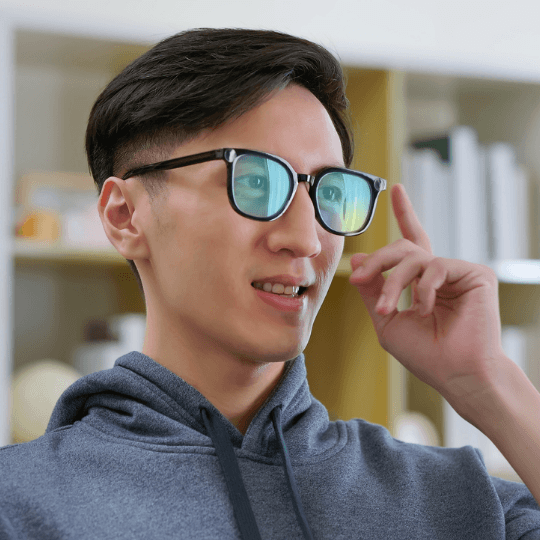
CANBERRA, Australia — Australia’s online-safety regulator is urging technology companies to build stronger consent protections into smart glasses before discreet recording becomes an ordinary part of public life.
An eSafety Commissioner assessment recommends automatic blurring of people who have not agreed to be recorded, tamper-resistant lights or other recording indicators and delays before footage can be livestreamed.
It also calls for safeguards against identifying members of the public and for recording functions to be disabled in sensitive locations.
Smart glasses can provide navigation, live translation, visual assistance and hands-free communication. For people with impaired vision, wearable cameras linked to artificial intelligence may describe surroundings or read text.
Those benefits make a blanket account of the technology as inherently abusive incomplete.
The danger lies in cameras becoming difficult to notice and easy to connect with facial recognition, livestreaming or automated searches. A person may not realise she is being recorded, where footage will be stored or how it will be edited.
Australian reports have documented women being filmed covertly and sexualised online. Smart glasses can reduce the friction that once required someone to raise a phone visibly before recording.
A small indicator light offers limited protection if it can be covered, disabled or misunderstood. Consent cannot depend on every bystander recognising every manufacturer’s signal.
Automatic face blurring could reduce harm, but only if it operates before footage is uploaded and cannot be reversed casually by the wearer. It must also work across skin tones, lighting conditions, head coverings and disability-related differences in appearance.
Sensitive spaces require stricter rules. Medical facilities, shelters, schools, bathrooms and changing rooms should not rely solely on users choosing to behave responsibly.
Data protection must cover more than the image itself. Devices may collect location, voice, identity estimates and information about whom the wearer encounters. Bystanders should not become involuntary entries in a private company’s biometric database.
Companies will argue that some restrictions reduce usefulness. That trade-off should be tested publicly rather than resolved through hidden product decisions.
Australian officials are considering broader privacy reform as the market expands. Regulation should establish default protections, independent security testing and meaningful penalties where companies knowingly facilitate covert abuse.
Women are often advised to monitor their surroundings and challenge anyone who might be recording. Smart-glasses policy should not transfer the entire burden to the person being observed.
Consent is not merely a social preference surrounding a finished device. It is a technical requirement that should shape what the device is capable of doing.


Join the discussion