
Imagine escaping violence and then having to work out which institution comes next.
Police for the complaint. A hospital for treatment. Another office for legal aid. Somewhere else for counselling. And, if returning home is unsafe, yet another search for a shelter willing and able to take you.
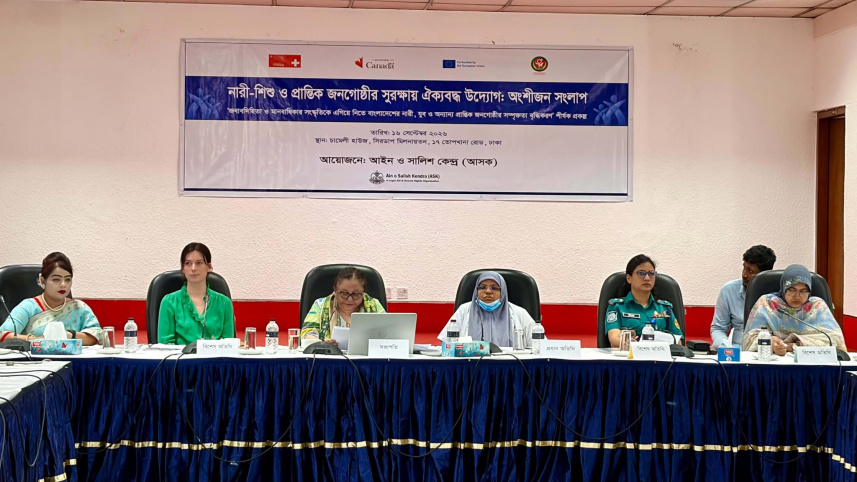
That fragmented journey was at the centre of a stakeholder dialogue held by Ain o Salish Kendra (ASK) in Dhaka on 16 September.
ASK Executive Director Tahmina Rahman said shelter homes for women, children and marginalised communities remain very few and inadequate. She stressed that shelter needs also extend to persons with disabilities and hijra people experiencing abuse. Speakers called for stronger coordination, accountability and functioning referral systems connecting the country’s existing services.
The problem is not an absence of institutions.
Bangladesh already has police services, government legal aid, Department of Women Affairs facilities, social-welfare services and One-Stop Crisis Centres. But speakers described gaps between them.
Liza Begum of Dhaka Metropolitan Police’s Women Support and Investigation Division said referral mechanisms frequently fail, particularly outside Dhaka, leaving survivors to navigate different institutions themselves. Rezmin Sultana of the National Legal Aid Services Organization noted that free legal aid is available to women and children through offices in all 64 districts, but digital access cannot help everyone when many marginalised women do not own phones.
At Dhaka Medical College Hospital, the One-Stop Crisis Centre can provide medical treatment alongside counselling, legal support, safety services and shelter referrals. Yet Dr Taiyeba Sultana told the dialogue that other crisis centres do not always have equivalent capacity. Department of Women Affairs official Ivy Akter also pointed to shortages of staff and logistics that can delay services and follow-up.
This is why survivor support should be designed from the woman’s perspective rather than the institution’s organisational chart.
A woman escaping violence does not experience her problem as separate medical, criminal, legal and housing files.
She experiences one crisis.
A functioning referral system should therefore allow her to enter at one point and be connected to everything else she needs without repeatedly explaining her trauma, finding unfamiliar offices or persuading each new institution that her case deserves attention.
Shelter itself also needs to mean more than a bed.
Women may arrive with children. Some have disabilities. Some need confidential locations. Others need longer-term housing, income support or help returning safely to work and education.
Bangladesh already has many pieces of a protection system.
The next step is making those pieces behave like one system.

Join the discussion