
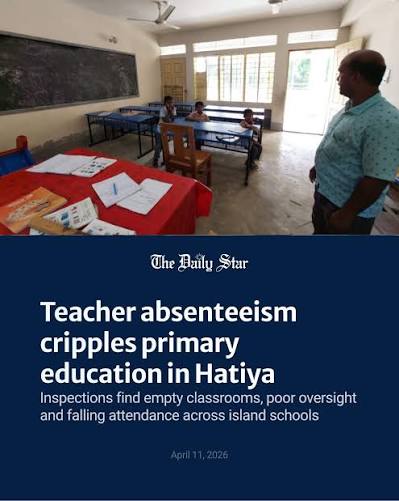
An assistant teacher at a government primary school in Gangachara, Rangpur, has been suspended after a fifth-grade girl alleged that he behaved sexually inappropriately with her during class.
The incident reportedly occurred on 31 August 2026. The student later told her parents, after which the allegation reached school and education authorities. United News of Bangladesh reported that several other female students subsequently also raised concerns about earlier inappropriate behaviour by the same teacher. (unb.com.bd)
The teacher has been suspended while authorities conduct a formal investigation.
That suspension is an administrative measure and should not be treated as a finding of guilt. The allegations will need to be assessed through the investigation and any subsequent legal or disciplinary process.
One student speaking up can reveal a wider safeguarding problem
The case gained wider attention after guardians gathered at the school on 2 September demanding action.
According to UNB, parents and guardians confined the local education officer, headteacher and several teachers at the school for around seven hours before police intervened and brought the situation under control. (unb.com.bd)
The confrontation reflects the level of anger and concern among families, but accountability should ultimately come through a credible investigation rather than public pressure alone.
The more important question now is whether the school and education authorities had effective systems in place for girls to report inappropriate behaviour safely before the situation escalated.
Children need complaint systems they can actually use
For a primary-school student, reporting sexual harassment or inappropriate behaviour can be extremely difficult.
A child may not have the language to describe what happened. She may fear that adults will not believe her, worry about punishment or feel embarrassed discussing behaviour involving a teacher.
That means schools cannot rely only on children having the confidence to make formal complaints.
Teachers, headteachers and education officials need child-friendly safeguarding procedures, clear reporting channels and staff trained to recognise warning signs.
Students also need to know which trusted adult they can approach and what will happen after they speak.
Other girls’ accounts must also be examined carefully
UNB reported that other female students raised allegations of earlier inappropriate behaviour after the fifth-grader’s complaint became known.
Those accounts need to be documented and investigated individually.
They should not automatically be treated as proven simply because multiple allegations have emerged. At the same time, investigators should examine whether there is a pattern and whether earlier warning signs were missed or left unreported.
Parents also deserve clear communication about what safeguarding measures are being taken while the investigation continues.
Schools must be safe enough for girls to learn
Bangladesh has made major progress in bringing girls into education.
But enrolment alone is not enough.
A school is only genuinely accessible when a girl can attend class without fearing harassment from classmates, staff or people in positions of authority.
Cases like the one in Gangachara should therefore be treated as more than individual disciplinary matters.
They are tests of whether educational institutions have systems capable of protecting children when an allegation involves someone who holds authority over them.
The girl at the centre of this case did what children are repeatedly encouraged to do when something feels wrong: she told an adult.
The responsibility now belongs to the adults around her—to investigate fairly, protect every child involved and ensure that speaking up does not create further harm.

Join the discussion