
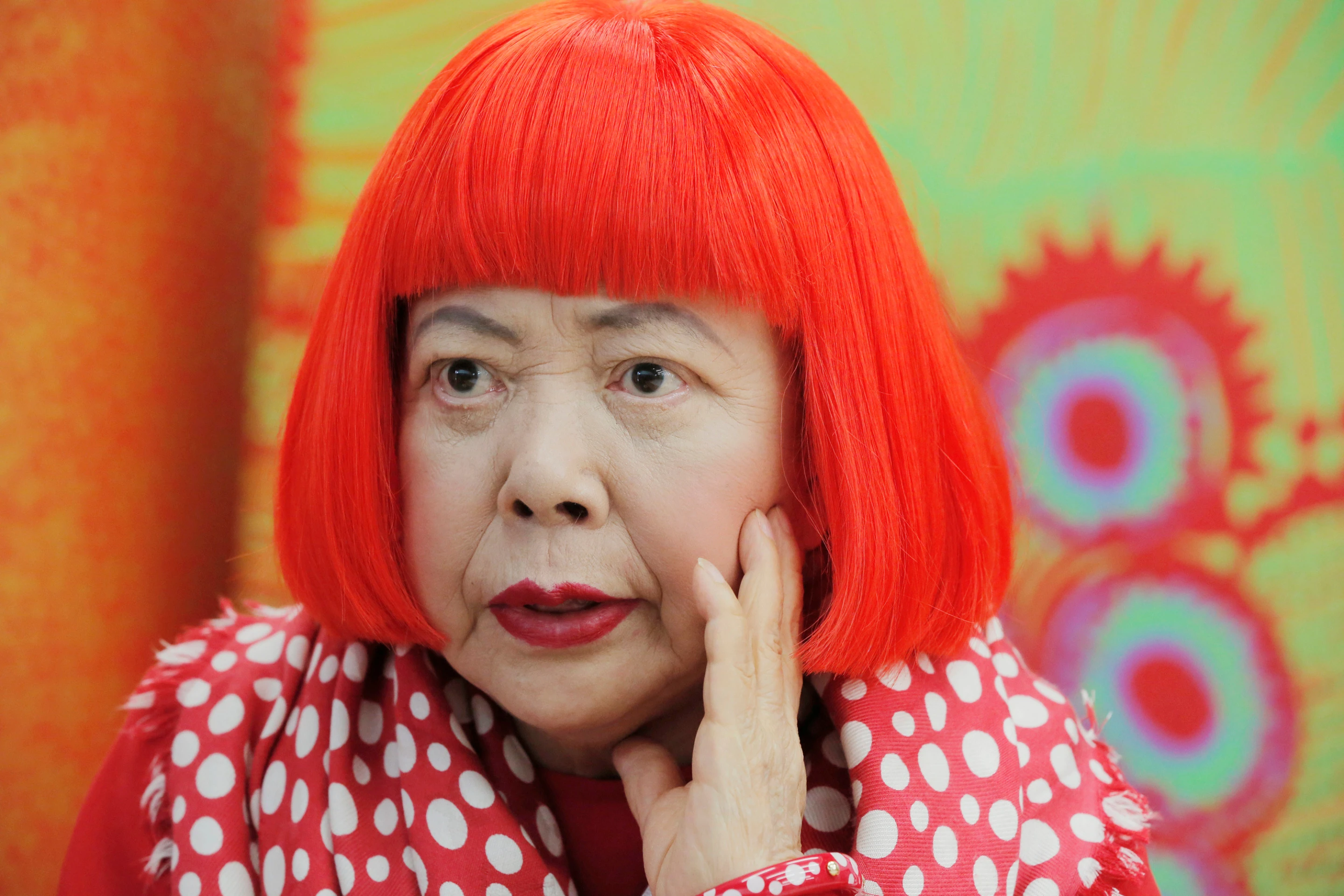
TOKYO, Japan — Yayoi Kusama, whose dots, mirrored rooms and repeated forms became among the most recognisable images in contemporary art, has died at 97.
Her studio announced on 27 August that she died on 14 August. Associated Press and Reuters subsequently confirmed the announcement.
Born in Matsumoto, Japan, in 1929, Kusama described experiencing visual hallucinations from childhood. Repeated patterns became a way to give form to those experiences, eventually developing into paintings, soft sculptures, performances, installations and the mirrored environments known as Infinity Rooms.
She moved to the United States in the late 1950s and entered New York’s experimental art scene. Her work intersected with minimalism, pop art, performance and anti-war activism, but recognition and market success did not arrive evenly.
Kusama returned to Japan in the 1970s and lived voluntarily in a psychiatric hospital from 1977, working from a nearby studio. That fact is often presented as the central explanation for her art. It should instead be treated as part of a life defined by an extraordinary working practice extending across more than seven decades.
Her pumpkins, flowers and immersive rooms later drew enormous museum audiences. Social media amplified their popularity, sometimes turning installations into photographic destinations detached from the work’s themes of infinity, self-erasure, anxiety and repetition.
Commercial visibility created another tension. Kusama’s imagery appeared in fashion collaborations and branded products while museums struggled to manage demand for brief encounters with her rooms. Popularity did not make the work intellectually empty, but it changed how audiences consumed it.
Her career also demonstrates how women artists can be marginalised early and canonised later. Kusama worked alongside men who entered art history more quickly, while her own influence was reassessed through retrospectives and scholarship.
Responsible obituaries should avoid romanticising mental illness as the source of creativity. Kusama repeatedly transformed distress through labour, experimentation and control of material. Her art did not simply happen to her.
The global queues will eventually shorten, and the commercial collaborations will become historical footnotes. What remains is a body of work asking viewers to lose their individual scale inside patterns that seem capable of continuing forever.
Kusama made repetition feel expansive rather than limiting. Her death closes a singular life, but the visual universe she constructed remains open.



Join the discussion