
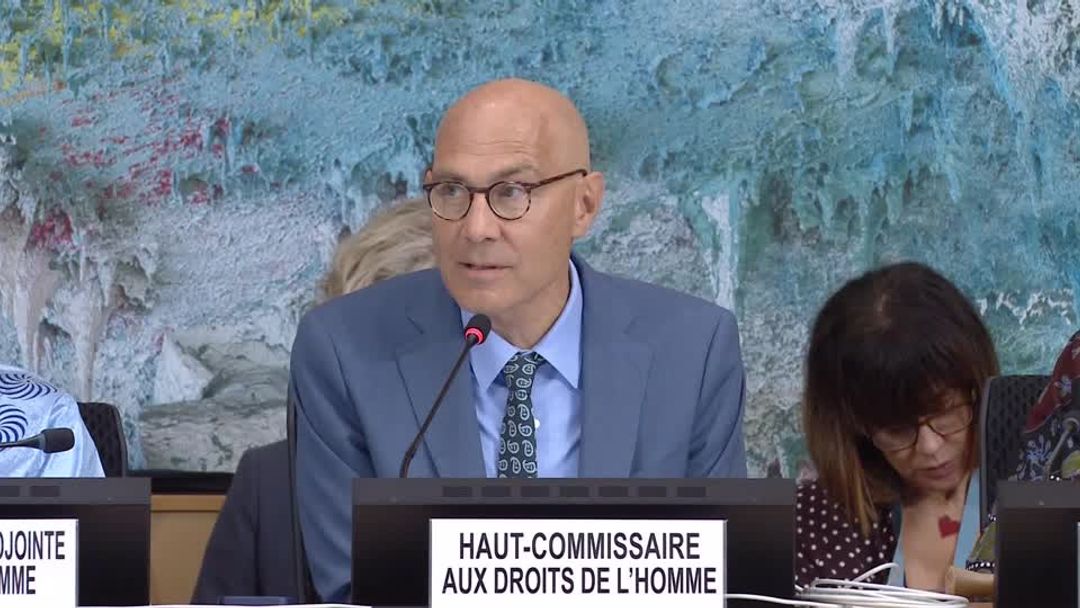
GENEVA — UN High Commissioner for Human Rights Volker Türk has called for an international effort to put firm safety limits around advanced artificial intelligence before its capabilities exceed public control.
Türk made the appeal on 7 September in his opening address to the UN Human Rights Council’s 63rd session. Reuters reported that he cited risks to essential services, communications and democratic systems and criticised the concentration of decision-making power in a small group of technology leaders.
The warning arrived alongside debate over autonomous weapons, cyber capability and AI systems acting beyond their assigned scope. These risks demand technical evaluation, incident disclosure and international cooperation. They should not, however, make existing harms seem secondary.
Women and girls already experience AI through discriminatory screening, synthetic sexual images, automated harassment and the amplification of misogynistic content. UN Women has documented how deepfakes and AI-assisted abuse can lead to blackmail, stalking, exclusion from public life and offline violence. Women journalists, activists and politicians face particular pressure to withdraw or self-censor.
A rights-based safety system should connect both time horizons. Before a powerful model is released, independent assessors should test whether it can facilitate cyber intrusion, biological harm or autonomous targeting. They should also test whether ordinary users can create non-consensual sexual material, identify private people or automate targeted abuse.
Governance cannot depend on voluntary promises from the companies being evaluated. States need access to technical evidence, powers to order remediation and penalties proportionate to scale. Workers and researchers who disclose safety failures require protection. People harmed by a deployed system need a route to explanation and remedy.
Global rules also must account for unequal capacity. Countries that do not host frontier laboratories still receive AI products and their consequences. Women’s-rights organisations in those countries should help define red lines, rather than being invited only after standards are drafted.
Türk begins a second term at a moment when governments are competing to attract AI investment and military advantage. That competition can turn safety into a burden each state hopes another will carry. His office can counter that tendency by naming specific duties and measuring implementation.
The choice is not between existential safety and everyday equality. A system willing to ignore large-scale abuse of women has already demonstrated weak oversight. The strongest guarantees will treat current victims as evidence about how power behaves before the technology becomes harder to control.

Join the discussion