
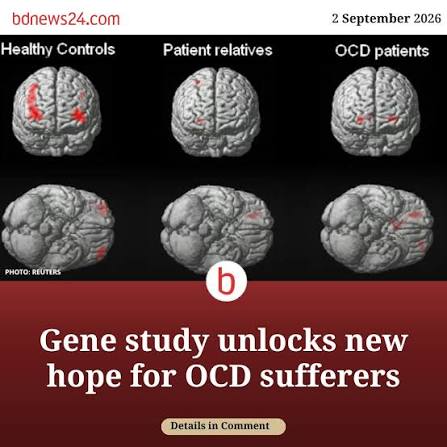
NEW BRUNSWICK, New Jersey — Researchers have identified 36 high-confidence genes linked to obsessive-compulsive disorder and chronic tic disorders, substantially expanding the biological targets available for studying two frequently overlapping conditions.
The international team analysed whole-exome sequencing data from 3,964 people with OCD, a chronic tic disorder such as Tourette syndrome, or both. The sample included 2,418 parent-child trios, allowing researchers to identify newly arising mutations as well as rare inherited changes that damage proteins.
The paper, published in Nature Neuroscience on 1 September, found an excess of damaging mutations among affected participants. Many risk genes were shared across OCD, tic disorders and other neurodevelopmental conditions, with patterns of activity in the cortex, striatum and cerebellum.
Before this work, only four high-confidence genes had been identified through this type of rare-variant analysis. More targets can help researchers investigate brain pathways and screen possible medicines, but a target is not a treatment. Laboratory work, safety testing and clinical trials would still take years.
Nor is the finding a test that can tell an individual whether she has or will develop OCD. The conditions are genetically complex; most patients will not carry one of these rare damaging variants, and carrying a variant does not automatically determine symptoms or severity.
OCD involves intrusive, unwanted thoughts or images and repetitive behaviours or mental acts performed to reduce distress. It affects an estimated 1% to 2% of people and can be disabling. Symptoms may intensify during reproductive transitions, including pregnancy and the postpartum period, making access to informed care particularly important for women.
The new study was not presented as a sex-specific analysis. SheFront readers should therefore not infer that the genes explain differences between women and men or justify treatment decisions during pregnancy. Future research should publish outcomes by sex where scientifically appropriate and include diverse ancestry groups, because rare-variant discovery can be distorted when sequencing cohorts are concentrated in a few populations.
Existing treatments remain relevant. Exposure and response prevention, other forms of cognitive behavioural therapy and certain medicines help many people, although access and response are uneven. No one should stop treatment or seek genetic testing based on this result alone.
The advance is foundational: it replaces a very short list of candidate genes with a broader map of biological pathways. Its value will be measured when that map produces safer, more effective care—and when research includes the women whose symptoms are too often dismissed as ordinary worry or perfectionism.



Join the discussion