
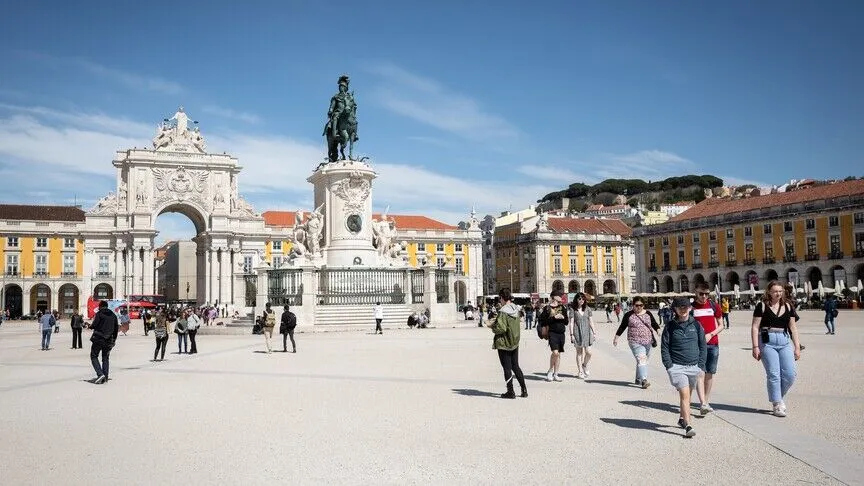
LISBON, Portugal — Portugal has enacted a nationwide prohibition on concealing the face in most public spaces, bringing the country into a widening European debate over religious expression, security and women’s autonomy.
President António José Seguro signed the legislation after amendments were made during its passage through parliament. The law covers garments or other items intended to prevent identification, with exceptions for health, professional, artistic and weather-related reasons. Places of worship, diplomatic premises and aircraft are also exempt.
Penalties reportedly range from €150 to €750 for negligent violations and €400 to €3,000 for intentional breaches. Coercing another person to cover her face because of gender, religion, age or origin can carry a prison sentence.
Supporters describe the legislation as a defence of individual freedom, social trust and women’s equality. Much of the political discussion, however, has focused on the niqab and burqa, garments worn by a small number of Muslim women.
Amnesty International Portugal has criticised the measure as discriminatory. That objection exposes the law’s central contradiction: it penalises forcing a woman to cover her face, but it can also penalise a woman who independently chooses to do so.
The legislation follows restrictions introduced in France, Belgium, Austria, Denmark and other European countries. Courts have sometimes accepted such measures under public-security or “social interaction” arguments, but rights groups continue to challenge whether broad bans are proportionate.
The issue should not be reduced to a contest between religious conservatism and secular modernity. Women affected by the law may hold different views about veiling, faith and public identity. A credible equality policy must account for those voices instead of treating Muslim women only as symbols in a national political debate.
Portugal’s implementation will now be closely watched, particularly the conduct of police, the treatment of visitors and residents, and whether enforcement disproportionately targets Muslim communities.
Source Check: Anadolu Agency, 19 August 2026; Brussels Signal, 19 August 2026
Image recommendation: Use an original photograph of Lisbon’s public spaces or commission a non-identifying editorial illustration. Do not use photographs of identifiable Muslim women without informed consent. Wikimedia Commons: Lisbon — select a file individually and follow its stated author-credit and licence requirements.


Join the discussion