
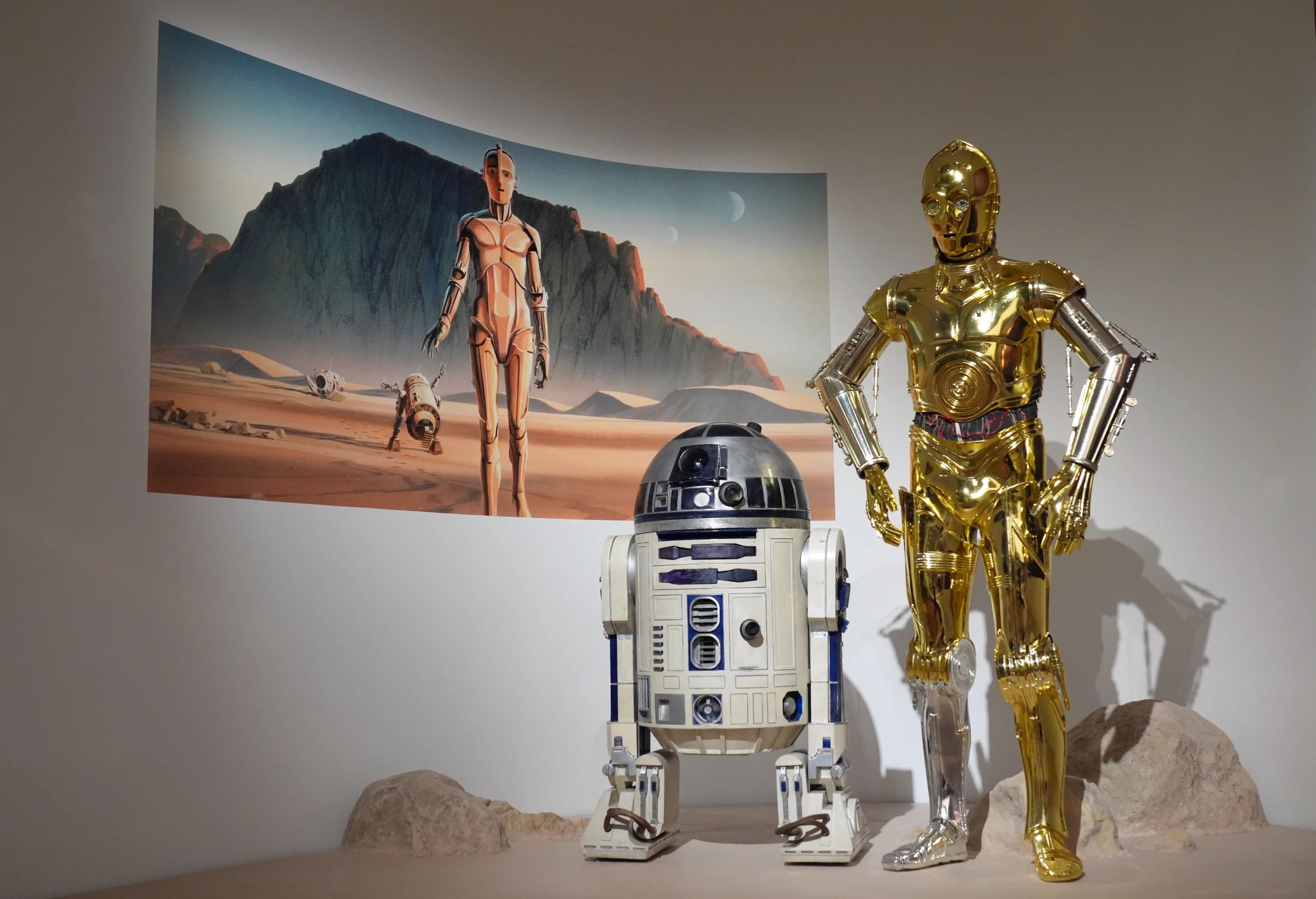
LOS ANGELES — When the Lucas Museum of Narrative Art opens on 22 September, its most consequential argument may not be about Star Wars. It will be that the images people encounter in comics, advertisements, film and public campaigns deserve to be studied beside paintings already certified as art.
George Lucas and Mellody Hobson co-founded the museum, built in Exposition Park after years of planning. The building contains more than 100,000 square feet of gallery space, while the surrounding site includes a 13-acre campus with a public park, theatres, classrooms and a research library.
The opening display will present roughly 1,300 works across more than 30 galleries. Only about 7% concerns Star Wars, according to the Associated Press. The broader collection includes Norman Rockwell’s image of six-year-old Ruby Bridges entering a desegregated New Orleans school, work by Frida Kahlo and Artemisia Gentileschi, comic art and material connected with civic movements.
Hobson’s role deserves attention beyond the familiar description of her as Lucas’s wife. She is a financial executive and a major collector of African-American art whose decisions helped shape both the institution and its holdings. A Black woman co-founding a museum of this scale changes who is visible as an author of cultural infrastructure, not just a donor to it.
The museum’s promise of narrative art can broaden access. Visitors who feel excluded by specialist art history may recognise an illustrated book, a movie design or a magazine image as an invitation into questions about power and representation.
Popular does not mean neutral. Advertisements taught gender roles; film posters created racial archetypes; political images decided whose suffering would be believed. Displaying such objects requires enough context to distinguish critical examination from nostalgia.
The institution also begins with unusual private power. Much of the collection comes from its founders, allowing two people to define a new category and build the museum that validates it. Transparent provenance, independent scholarship and visible curatorial debate will be essential.
Women and girls should appear not only as subjects in stories but as artists, writers, designers and decision-makers. Labels need to identify the labour behind collaborative forms, where women’s contributions have often disappeared beneath a director, publisher or brand.
The Lucas Museum can make an important democratic claim: everyday images shape public life and merit serious attention. Hobson’s leadership gives that claim additional force. Its credibility will depend on whether the institution encourages visitors to question the stories in its collection—including the story the museum tells about itself.



Join the discussion