When the Ride Hurts: Auto-Rickshaws, Pregnancy, and the Silent Health Crisis of Dhaka’s Women
Dhaka runs on auto-rickshaws. But for thousands of women, each jolting ride is not just a nuisance—it’s a health
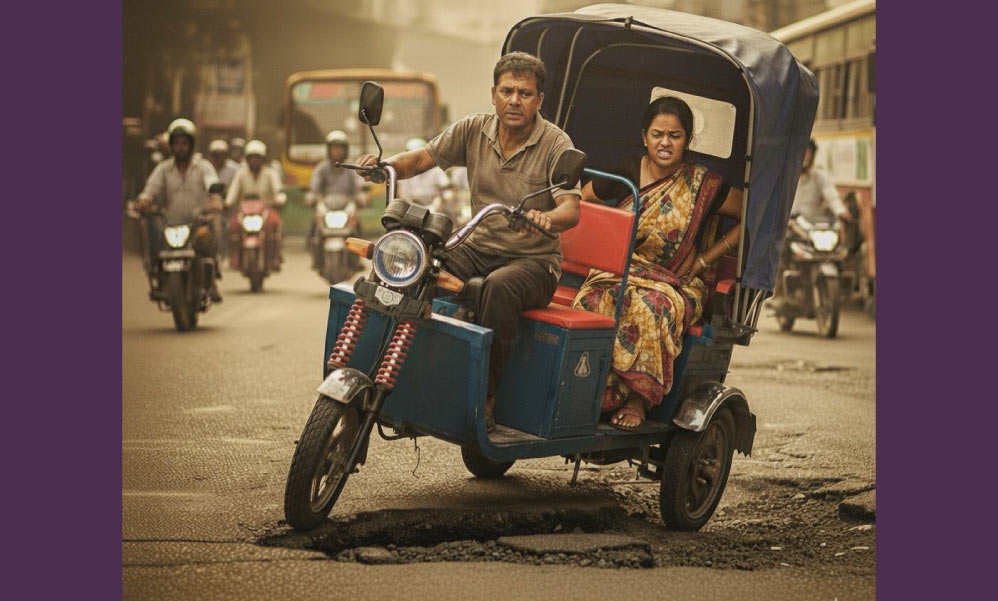
Dhaka runs on auto-rickshaws. But for thousands of women, each jolting ride is not just a nuisance—it’s a health hazard. Behind the buzzing three-wheelers lies a story of pain, infections, miscarriages, and unspoken struggles that are now demanding urgent national attention.
The Ubiquitous Auto-Rickshaw
Every corner of Dhaka city echoes with the rattle of auto-rickshaws. They are cheap, accessible, and unavoidable for daily commuters. But with reckless driving, overcrowding, and the city’s broken roads, these rides come at a cost.
For men, it is discomfort. For women, it is reproductive health at risk.
Everyday Pain, Never Spoken Aloud
In the MommyKidz App community survey, more than 2,000 women shared their untold stories:
- 62% said they experienced pelvic or abdominal pain after frequent auto rides.
- 37% reported recurrent urinary tract infections (UTIs) in the last six months.
- Many admitted they had never told anyone—not even family—about these problems.
One university student said:
“After every ride, my lower abdomen throbs. Sometimes I cannot focus in class, but how do you explain this to your parents or teachers? People don’t even believe this pain exists.”
Another office worker shared:
“The jolts feel like my body is being shaken from inside. I once bled after a particularly rough ride but didn’t dare talk about it.”
This silence, born of stigma and shame, is turning a transport problem into a hidden public health emergency.
Pregnancy: The Hidden Danger No One Talks About
For pregnant women, auto-rickshaw rides can be dangerous—even life-threatening.
Doctors warn that the constant shocks and vibrations directly affect the uterus:
- In the first trimester, women face an increased risk of miscarriage.
- In the second trimester, jolts may trigger abdominal cramps, spotting, and pelvic pressure.
- In the third trimester, rides can cause premature contractions, early labor, and pelvic floor stress.
A young mother from the MommyKidz survey described:
“During my second trimester, I took an auto to the hospital. The road was full of potholes. After that ride, I had severe cramps for two days. My doctor told me I was at risk of losing the baby. Since then, I don’t take autos—but that means skipping work.”
When mobility becomes unsafe, pregnancy is no longer just a private journey—it becomes a social and economic risk.
Medical Experts Sound the Alarm
Gynecologists across Dhaka confirm they are seeing a rise in cases linked to rough commutes:
- UTIs and pelvic inflammations in young women
- Pelvic floor disorders in mothers.
- Pregnancy complications tied to continuous jolts.
Dr. Rahima Sultana, a gynecologist at a leading hospital, explained:
“Every week, I see pregnant women complaining of pain or bleeding after rough rides. This is not an exaggeration—autos are harming women’s reproductive health. We must treat this as a public health concern.”
Why Women Suffer More
Unlike men, women’s pelvic anatomy is more vulnerable to constant vibration and pressure. Add to this:
- Taboos around reproductive health → women don’t speak up.
- Lack of medical awareness → many ignore symptoms until it’s too late.
- No safe transport options → women are forced to risk their health for mobility.
The Bigger Picture: A Gendered Transport Crisis
This is not just about comfort. It’s about gender justice.
Women cannot access education, jobs, or healthcare safely if their daily commute threatens their bodies. In a city where metro and buses are still limited, auto-rickshaws are both a lifeline and a trap.
MommyKidz’s survey proved one thing clearly:
Women are ready to speak, but the system is not ready to listen.
What Needs to Change – Now
Experts and women’s rights advocates demand urgent action:
- Regulate auto-rickshaw numbers and enforce driving rules.
- Repair broken roads to minimize daily shocks.
- Public health campaigns warning pregnant women of auto-rickshaw risks.
- Expand safe alternatives: metro, buses, and women-friendly ride-sharing.
- Recognize women’s mobility as a reproductive health issue—not just a transport debate.
The Call to Action
Auto-rickshaws are not disappearing anytime soon. But unless policymakers act, these vehicles will continue to silently damage the health of half the city’s population.
For women—especially pregnant women—this is not just about bumpy rides. It’s about whether Dhaka will allow them to move safely, live fully, and give birth without unnecessary risk.
And thanks to platforms like MommyKidz, these voices are finally coming into the light.
The question is—who will act on them?